52 activities for assisted living, memory care, nursing homes, adult day programs and home visits. Filter by group size, cognitive level, focus and time. Every activity lists setup, steps, adaptations for vision, hearing, mobility and memory, care notes and facilitator tips, and prints as a half-page activity card. Below the library: a recreation therapy directory, a reminiscence question bank and a printable monthly calendar.
- No ads
- No sign-up or email
- Free to print and copy for your residents
Activity finder
Pick what you know about your group. Every filter is optional, and the list updates as you go.
No activities match all of those filters. Try removing one.
Word and memory games 6 activities
Group word games where the whole room shares the answer, so nobody is put on the spot. Most need a whiteboard or a big pad of paper and a leader with a loud, friendly voice.
Alphabet Categories
Also called: A to Z, Alphabet Game
The group picks a category, such as flowers or things in a kitchen, and works through the alphabet together, one letter at a time.
How to run it
You need
Whiteboard or large pad, thick marker.
Setup
Write the alphabet down the left side of a whiteboard in big letters. Seat everyone in a half circle facing the board, with anyone who has low vision or hearing in the front row.
How to run it
- Ask the group to choose a category. Good starters: foods, cities, girls’ names, boys’ names, things you find in a garage.
- Start at A. Anyone can call out an answer; the leader writes the first one next to the letter.
- Move to B, then C. If a letter stumps the room, give a hint or skip it and come back later.
- Accept close calls generously. If someone says “quilt” for Q in a kitchen category, ask them where it lives and write it down.
- When you reach Z, read the whole list back to the group.
Care and dignity
- Never go around the circle demanding an answer from each person. Calling out is voluntary.
- Let people who prefer to watch simply watch; reading the list aloud still includes them.
Adapt it
- Vision: use a black marker on a white board, letters at least three inches tall, and read each answer aloud as you write it.
- Hearing: repeat every answer clearly before you write it, facing the group.
- Memory: pick categories tied to long-held knowledge, like foods or first names, rather than recent topics.
Facilitator tips
- Skip Q, X and Z without comment if the group is tiring. Nobody misses them.
- Keep the finished boards and post one on the bulletin board with the date and category.
Variations
- Reverse it: give a letter and see how many categories the group can fill with it.
- Split into two tables and compare lists at the end.
Finish the Saying
Also called: Complete the Proverb, Old Sayings
The leader reads the first half of a familiar saying and the group calls out the ending, then talks about what it means.
How to run it
You need
A list of 30 to 40 common sayings, written by the leader.
Setup
Before the session, write out 30 to 40 everyday sayings and proverbs on cards, with the first half on the front. Stick to sayings that were common in the US for generations, like “an apple a day” or “the early bird.”
How to run it
- Read the first half slowly and clearly, for example “A penny saved…” and pause.
- Let the group call out the ending together. Repeat the full saying once it’s said.
- Every few sayings, ask an open question: “Who used to say that in your house?” or “Is that true?”
- Mix in a few that people may finish differently, and enjoy the different versions.
- Stop while energy is still good, usually after 20 or so sayings.
Care and dignity
- Treat every ending as fine. If someone gives a funny or mixed-up version, laugh with them and say the common one as an aside.
- Avoid sayings about age, illness or death.
Adapt it
- Hearing: hold up the card with the first half printed in large letters as you read it.
- Memory: well-worn sayings often stay familiar long after newer facts fade, so this one tends to work into moderate impairment.
- Later-stage: a few sayings during a one-to-one visit can open a short chat, with no expectation of an answer.
Facilitator tips
- Read the first half, then pause long enough for the slowest voice in the room to join in.
- Sayings with a story behind them (“mind your p’s and q’s”) make a good talking point.
Variations
- Weather sayings only, such as “red sky at night.”
- Ask the group to share a saying from their own family or trade that nobody else knows.
Words from a Word
Also called: Hidden Words, Little Words
The leader writes one long word, and the group finds as many shorter words as they can make from its letters.
How to run it
You need
Whiteboard or large pad, markers, optional large-print paper and pencils.
Setup
Pick a long word tied to the season or a theme, such as THANKSGIVING, WATERMELON or GRANDFATHER CLOCK. Write it across the top of the board in capitals.
How to run it
- Explain the rule: each new word can only use letters from the big word, and only as many times as they appear.
- Call out words as a group. The leader writes each one under the big word.
- Set a gentle goal, like 20 words, and count them up as you go.
- When the group slows down, point to a letter and ask for words that start with it.
- Finish by reading the list and pointing out the longest word found.
Care and dignity
- Keep it a group effort. Avoid scoring individuals, which can turn it into a test.
Adapt it
- Vision: write the long word with a space between each letter.
- Hands: no writing is needed from players; the leader does it all.
- Memory: keep the long word visible the whole time so nobody has to hold it in mind.
Facilitator tips
- Have a list of 30 or so possible words ready beforehand so you can offer hints.
- Two-letter and three-letter words count. They keep everyone in the game.
Variations
- Independent groups can play in pairs with paper and compare lists.
Pairs and Opposites
Also called: Things That Go Together
The leader says one half of a familiar pair, like “salt and,” or a word like “hot,” and the group answers with its partner or opposite.
How to run it
You need
A list of 30 pairs, written by the leader.
Setup
Write two lists: everyday pairs (salt and pepper, bread and butter, needle and thread, hammer and nails) and simple opposites (up and down, early and late). Mix them on one sheet.
How to run it
- Explain with an example or two: “If I say cup, you might say saucer.”
- Read the first word of each pair and let the group answer together.
- Any reasonable answer counts. “Cup and coffee” is as good as “cup and saucer.”
- Every so often, ask a follow-up: “Who used a needle and thread a lot?”
Care and dignity
- Keep the pace slow and warm. Silence is fine; give the answer yourself and move on.
Adapt it
- Memory: this suits groups where open-ended questions are too hard, since the first word does much of the work.
- Hearing: show the first word on a card as you say it.
- Later-stage: five or six very familiar pairs (salt and pepper, bread and butter) at a bedside can make a short, easy chat.
Facilitator tips
- Pairs from work and home life (lock and key, pots and pans, nuts and bolts) reach a wider range of people.
- End on an easy one so the last answer is a success.
Variations
- Rhymes: say a word and the group offers a word that rhymes.
Twenty Questions
Also called: Animal, Vegetable or Mineral
One person thinks of an object, and the group asks yes-or-no questions to work out what it is, with up to 20 questions.
How to run it
You need
Slips of paper with object names, optional.
Setup
Seat the group in a circle or half circle. The leader goes first to show how it works. Keep a tally of questions on the board.
How to run it
- The chooser says whether the object is an animal, a plant or a thing.
- Group members ask yes-or-no questions, such as “Is it bigger than a breadbox?”
- The chooser answers only yes or no. The leader marks each question on the board.
- Anyone can guess at any point. If 20 questions pass, the chooser reveals the answer.
- Whoever guesses can choose next, or pass the turn to the leader.
Care and dignity
- Nobody has to take a turn as chooser. Offer the slips so choosing is easy.
Adapt it
- Memory: write the yes answers on the board as clues so nobody has to remember them.
- Hearing: the leader repeats each question loudly before the chooser answers.
- Hands: the chooser can be handed a slip with an object written on it instead of thinking one up.
Facilitator tips
- Household objects from 50 years ago (washboard, rotary phone, milk bottle) make lively rounds.
- If the group stalls, the leader can offer a free clue.
Group Word Scramble
Also called: Jumbled Words
The leader writes a word with its letters mixed up, and the group works together to unscramble it, with a theme as a hint.
How to run it
You need
Whiteboard or large cards, markers.
Setup
Choose 10 to 15 words on one theme, such as garden flowers or kitchen tools. Write each scrambled word on a large card, or on the board one at a time.
How to run it
- Tell the group the theme first. It’s the biggest hint.
- Show the first scrambled word and read the letters aloud.
- Let the group call out guesses. If it’s slow going, reveal the first letter, then the second.
- Write the answer under the scramble once someone gets it, and move to the next.
Care and dignity
- Never leave a word hanging until the room feels stuck. Reveal and move on.
Adapt it
- Vision: use cards with one large letter each so you can move letters around on a ledge or table.
- Memory: shorter words of four or five letters keep it within reach.
- Hands: the leader handles all the writing.
Facilitator tips
- Check every scramble before the session; it’s easy to make one that spells a second word.
- Mix one or two easy words in early so the group gets a quick win.
Seated exercise and movement games 9 activities
Movement games that work from a sturdy chair or a wheelchair: a seated parachute set, balloons, beanbags, a ball and some music. Check care plans for movement limits before you start, and keep water nearby.
Mirror Moves
Also called: Follow the Leader Warm-Up, Seated Stretch
A seated warm-up where the leader faces the group and everyone copies slow, simple movements, like rolling shoulders or tapping toes.
How to run it
You need
Optional music player.
Setup
Arrange chairs in a half circle so everyone can see the leader. Check that wheelchairs have brakes on. Play quiet music if you like.
How to run it
- Sit facing the group at their level. Start with a deep breath in and out together.
- Move slowly from top to bottom: nod yes, shake no, roll shoulders, reach forward, open and close hands, march feet, circle ankles.
- Do each move about 8 times, counting aloud.
- After a few rounds, invite a volunteer to lead a move of their own.
- End with a stretch forward and a long breath out.
Care and dignity
- Check care plans for shoulder, hip and neck limits. Keep reaching below shoulder height for anyone with shoulder restrictions.
- Avoid fast head turns and neck circles; a slow nod and turn are enough.
- Watch for breathlessness and let anyone rest at any time.
Adapt it
- Mobility: every move has a smaller version. Say so aloud: “Do as much as feels good.”
- Hearing: since it’s visual, it works well with hearing loss; keep your moves big and clear.
- Later-stage: mirroring often works without verbal instructions; sit close and face the person, one-to-one.
Facilitator tips
- Use everyday motions people know: stirring a pot, pulling a rope, rowing a boat, kneading dough.
- This makes a good opener for any group session in this library.
Seated Parachute Waves
Also called: Parachute Ripples
Seated in a circle, everyone holds the edge of a parachute and makes small ripples, then big waves, together.
How to run it
You need
Play parachute, 6 to 12 feet across, with handles.
Setup
Set chairs and wheelchairs in a tight circle, close enough that the parachute is slightly slack when everyone holds an edge. Brakes on, armrests where possible. A 6 to 12 foot parachute suits most seated circles.
How to run it
- Hand out the edge so each person has a handle or a fold of fabric. Staff fill any gaps.
- Start with tiny ripples: shake gently, like shaking out a tablecloth.
- Build to slow waves: everyone lifts to chest height, then lowers to lap height, together.
- Call out weather: “light breeze” (small ripples), “storm” (bigger shakes), “calm sea” (still).
- End with everyone lifting together, letting the parachute float down onto laps.
Care and dignity
- Older skin tears easily. Avoid quick yanks, and check that no one has fabric wrapped around fingers or wrists.
- Keep lifts below shoulder height for anyone with shoulder limits.
- Let anyone hand off their section and watch. Some people find the moving fabric startling at first.
Adapt it
- Hands: someone with a weak grip can rest hands on the fabric instead of gripping.
- Later-stage: the color and moving air are the point; keep it to a few minutes of gentle waves.
- Mobility: lift to shoulder height at most.
Facilitator tips
- Hum or play a waltz-time song and wave on the beat.
- Ask the group to describe the colors as they move; it adds talk without effort.
Parachute Ball Roll
Also called: Ball on the Parachute
The seated group tilts the parachute to roll a soft ball around the edge, keep it from falling off, or steer it into the center hole.
How to run it
You need
Play parachute with a center hole, one or two soft lightweight balls.
Setup
Same seated circle as parachute waves, brakes on. Use a soft ball about the size of a cantaloupe.
How to run it
- Put the ball on the parachute and ask the group to keep it from falling off.
- Next, try to roll it all the way around the edge: each person lowers their side as the ball comes toward them.
- Then try to sink it in the center hole. Count how many tries it takes.
- Add a second ball once the group has the hang of it.
Care and dignity
- Use a light, soft ball only. A heavy ball can strike a face when it bounces.
- Avoid fast lifts; skin and shoulders come first.
Adapt it
- Vision: use a brightly colored ball that contrasts with the parachute.
- Hands: the ball steers fine even if a few people simply hold the fabric still.
- Memory: give one instruction at a time and show it before saying it.
Facilitator tips
- Cheer for the group’s best streak, not for any one person.
- If the ball keeps flying off, the parachute is too taut. Move chairs in a little.
Parachute Pass-Around
Also called: Merry-Go-Round, Parachute Turn
The seated group passes the parachute edge hand over hand so the whole chute turns slowly like a merry-go-round.
How to run it
You need
Play parachute.
Setup
Seated circle with brakes on. Mark one spot on the parachute, like a bright color panel, so the group can watch it travel.
How to run it
- Everyone holds the edge with both hands.
- On “pass,” each person slides the fabric to their right, hand over hand, at a slow pace.
- Watch the marked panel travel around the circle. When it comes back, cheer.
- Reverse direction and pass to the left.
Care and dignity
- Pass slowly. Fabric pulled quickly can burn or tear thin skin.
- Make sure no one’s rings, bracelets or sleeves catch.
Adapt it
- Hands: people with arthritis can push the fabric along with flat palms instead of gripping.
- Memory: the leader says “right” and points each time.
- Mobility: keep the fabric at lap height so no reaching is needed.
Facilitator tips
- Sing a simple counting song or play music and stop when the music stops.
- Ask the person sitting under the marked panel when the music stops to name a favorite color, or to pass.
Seated Balloon Volley
Also called: Balloon Volleyball, Balloon Tap
Seated players tap a balloon back and forth across the circle, or across a low string net, and try to keep it from touching the floor.
How to run it
You need
Latex-free balloons, optional foam pool noodles cut in half, optional string or yarn for a net line.
Setup
Seat players in a circle, or in two facing rows about six feet apart with a string tied between two chairs at knee height as the net. Brakes on.
How to run it
- Toss a balloon into the middle.
- Players tap it with hands or a half noodle to keep it up. Count taps out loud as a group.
- If it lands, start the count again. Try to beat the best count.
- For the two-row version, tap it over the string. A point goes to a side when the balloon lands on the other team’s floor.
Care and dignity
- Many balloons are latex. Check for latex allergies and use latex-free balloons.
- Staff, not players, retrieve balloons from the floor. Leaning out of a chair to reach is a fall risk.
- Pop and remove any burst balloon pieces right away; they’re a choking hazard.
Adapt it
- Mobility: pool noodles extend reach, so nobody has to lean far out of a chair.
- Vision: use bright balloons and only one at a time.
- Hands: hitting with a palm or a noodle needs no grip.
Facilitator tips
- A balloon with a jingle bell inside (tie it in before inflating) is easier to follow for people with low vision.
- Keep a spare balloon blown up, since pops will startle people. Warn the group that it may happen.
Variations
- Call a name before tapping it to that person.
Beanbag Target Toss
Also called: Beanbag Toss, Bucket Toss
Seated players take turns tossing beanbags into a basket or onto a numbered target and add up points.
How to run it
You need
6 to 10 beanbags, a laundry basket or bucket, or a target mat with numbered rings, scoreboard.
Setup
Place the basket or target about four to six feet from the throwing chair. Seat others in a half circle so they can watch. Mark three distances so each person can choose one.
How to run it
- Each player gets three beanbags per turn.
- Toss underhand toward the target. A beanbag in the basket scores 2; one touching the basket scores 1.
- A staff member or volunteer collects the beanbags and hands them to the next player.
- Keep a team score on the board rather than individual scores.
- Play three or four rounds.
Care and dignity
- Beanbags filled with dried beans or corn can be a problem for anyone who might put one in their mouth; use plastic-pellet beanbags with sewn seams for memory care.
- Players never bend to pick up beanbags from the floor. Staff hand them back.
Adapt it
- Mobility: let each player choose their distance; points stay the same.
- Vision: a bright basket against a plain floor is easier to see. Tap the basket to give a sound cue.
- Hands: smaller beanbags suit weak grips; heavier ones suit tremor.
Facilitator tips
- Put the score on the board in big numbers and add it up together.
- A seasonal target (a pumpkin-colored basket, a snowman cutout) ties the game to the calendar.
Variations
- Tic-tac-toe: tape a big grid on the floor and play two teams, X and O.
Seated Bowling
Also called: Hallway Bowling, Chair Bowling
Players roll a light ball from their chair toward ten plastic pins, with two rolls a turn and a group scoreboard.
How to run it
You need
Lightweight plastic pins or 10 empty plastic bottles, a soft playground ball or plastic bowling ball, scoreboard, optional bowling ramp.
Setup
Set up the pins in a triangle eight to twelve feet from the bowling chair, in a hallway or along the side of the room. Seat a volunteer at the pins to reset them. Lay out the scoreboard with large print.
How to run it
- The bowler sits in the bowling chair, brakes on, facing the pins.
- Roll the ball with one or two hands from the side of the chair or between the knees.
- Count pins knocked down, then give a second roll.
- A volunteer resets the pins and returns the ball to the next bowler’s hands.
- Play five frames and add scores as a team.
Care and dignity
- Bowlers stay seated. Bending to release the ball should stay within a comfortable range; offer the ramp first.
- Clear the lane of walkers and feet, and seat watchers well to the side.
Adapt it
- Mobility: a bowling ramp lets someone with limited arm movement aim and give a push.
- Vision: stand behind the pins and call out so the bowler can aim toward your voice.
- Hands: a light playground ball works for anyone who can’t hold a heavier ball.
Facilitator tips
- Fill the bottles with an inch of water or sand so they don’t fall at a breath.
- Running a weekly league with team names on the board gives people something to come back for.
Ball Pass Categories
Also called: Hot Potato Categories, Name It and Pass It
The group passes or gently tosses a soft ball around a seated circle, and whoever catches it names something in a category, or passes.
How to run it
You need
A soft ball about the size of a cantaloupe.
Setup
Seat everyone in a circle close enough to hand the ball over or toss it underhand a short way. Choose a category, such as fruits or states.
How to run it
- The leader names the category and passes the ball to the first person.
- That person names one item, or says “pass,” then hands or tosses the ball to someone else.
- When the category runs dry, the next person picks a new one.
- Speed up a bit as the group warms up, or switch to handing the ball only.
Care and dignity
- Say each person’s name before you toss so nobody is caught off guard.
Adapt it
- Mobility: handing the ball to the neighbor works as well as tossing.
- Memory: use easy categories like colors or foods; “pass” is always a fine answer.
- Hands: a soft knobby ball or a beanbag is easier to catch and hold.
Facilitator tips
- Help out quietly by offering two choices: “Apple or banana?”
- Play without categories at first, just passing to music, then add them.
Chair Dancing
Also called: Seated Dance, Sit-Down Dance Party
Seated dancing to music people know, with simple arm, hand and foot moves that change with each song.
How to run it
You need
Music player and speaker, optional scarves or ribbons, optional shakers.
Setup
Pick five or six songs with different tempos, such as a march, a waltz and a swing number. Seat everyone where they can see the leader. Hand out scarves if using them.
How to run it
- Start with a slow song: sway side to side and wave a scarf.
- Move to a march: march the feet, swing the arms.
- Try a waltz: sway in threes, sweep the arms in big circles.
- Go back to a slower song and let the movement wind down.
- End with a stretch and a sip of water.
Care and dignity
- Keep water nearby and offer it between songs.
- Lower the volume if the room is small; loud music in a hard room can be upsetting.
- Nobody needs to stand. If someone wants to dance standing, staff stay close and the floor is clear.
Adapt it
- Later-stage: scarves and familiar music give a person something to watch and hold; keep songs short and staff close by.
- Mobility: hands-only or feet-only dancing is still dancing.
- Hearing: turn the bass up and keep moves visible so people can follow the beat with their eyes.
Facilitator tips
- Ask the group for requests and write them down for next time.
- Songs from the years when most of the group were teens and young adults tend to get the most response.
Table, card and dice games 7 activities
Classic table games with large-print materials and simple rules. Small tables of four to six work best, with a volunteer or staff member at any table that needs a hand keeping track.
Large-Print Bingo
Also called: Bingo, Lotto
Classic number bingo with large-print cards and a slow, clear caller, played for small prizes or the honor of winning.
How to run it
You need
Large-print bingo cards, chips or slide-shutter cards, a cage or bag of numbered balls, small prizes.
Setup
Use cards with numbers at least an inch tall and high contrast. Slide-shutter cards (the windows close over each number) suit shaky hands. Seat the caller where everyone can see their face, and put a whiteboard behind them.
How to run it
- Explain the pattern for this game: a line, four corners or a full card.
- Call each number twice, slowly: “B, seven. B, seven.” Write it on the whiteboard as you call.
- Give a long pause, then move on. Watch the room and slow down if people are still looking.
- When someone calls “Bingo,” read the card back against the board.
- Play several short games rather than one long blackout.
Care and dignity
- Use chips no smaller than a quarter, and skip small candy as markers for anyone who might eat them.
- Some residents may treat prizes as a big deal. Keep them small and plentiful, and play for points, not money.
Adapt it
- Hearing: say the letter and number apart, and add a clue that can’t be misheard: “N, thirty-one. That’s three, one.”
- Vision: write every called number on the board in thick marker and leave them all up.
- Memory: a helper sits at each table to check cards quietly and help mark numbers.
Facilitator tips
- Numbers that sound alike (fifteen and fifty, thirteen and thirty) cause most mistakes. Say the digits.
- Theme bingo with pictures or words, such as garden flowers, works for groups who find numbers hard.
Variations
- Picture bingo with photos of objects, or word bingo with old sayings.
Dominoes
Also called: Block Dominoes, Draw Dominoes
Players take turns matching the ends of dominoes in a line; the first to play all their tiles wins the hand.
How to run it
You need
A set of dominoes, ideally jumbo or large-dot.
Setup
Use a double-six set. Turn all tiles face down and shuffle them on the table. Each player draws seven tiles (five if four people play).
How to run it
- The player with the highest double starts by placing it in the middle.
- Moving clockwise, each player places a tile so that one end matches an open end of the line.
- If you can’t play, draw from the pile until you can, or pass if the pile is empty.
- The first player out of tiles wins the hand. If everyone is stuck, the lowest total of dots wins.
Care and dignity
- Jumbo dominoes are safer for anyone who might put things in their mouth.
- Let people play at their own pace. A slow player is not holding up the game.
Adapt it
- Vision: jumbo dominoes with colored dots let players match by color as well as count.
- Memory: play with tiles face up and work the line together as a team.
- Hands: a domino rack or a book stand keeps tiles upright without holding them.
Facilitator tips
- Some people know dominoes from their own family or neighborhood and play by house rules. Let them teach their version.
- For a quiet small group, two players and a staff member make a good afternoon table.
Pig
Also called: Hold or Roll
Players roll one die as many times as they dare, adding up points, but a roll of 1 wipes out the turn’s total.
How to run it
You need
One large die, paper and pen or a whiteboard for scores, a dice tray or shallow box.
Setup
Seat players around a table with a dice tray in the middle. Draw a score column for each player on the board.
How to run it
- On your turn, roll the die and add the number to your running total for that turn.
- Keep rolling or say “hold.” Holding banks your turn total.
- If you roll a 1, you lose that turn’s points and the die passes on.
- First to 100 points wins. For a shorter game, play to 50.
Care and dignity
- Keep the mood light. A 1 should get a groan and a laugh, never a dig at the player.
Adapt it
- Vision: use a big die with dots, not numerals, in high contrast.
- Hands: roll the die from a cup into the tray, or have a helper roll while the player decides.
- Memory: the scorekeeper says the running total aloud after every roll.
Facilitator tips
- The decision to stop or keep going is where the fun is. Ask the table for advice to get everyone talking.
- A dice tray stops dice rolling off the table and saves trips to the floor.
Ship, Captain and Crew
Also called: Six, Five, Four
A traditional dice game where each player gets three rolls to find a 6 (the ship), a 5 (the captain) and a 4 (the crew), then scores the other two dice.
How to run it
You need
Five dice, a cup, a dice tray, paper and pen for scores.
Setup
Seat players around a table with the tray in the middle. Write the order on a card: 6 first, then 5, then 4.
How to run it
- Roll all five dice. If there’s a 6, set it aside.
- Once you have a 6, set aside a 5; once you have a 5, set aside a 4. They must come in that order.
- You get three rolls in total. If you have the 6, 5 and 4, the other two dice are your cargo; add them up for your score.
- If you don’t get all three, you score zero for that turn.
- Highest cargo after an agreed number of rounds wins.
Care and dignity
- Play for points, not money or snacks, so nobody feels pressured.
Adapt it
- Vision: large dice and a light-colored tray.
- Memory: put the reference card with 6, 5, 4 in front of each player.
- Hands: roll from a cup, or let a partner roll.
Facilitator tips
- Teach it with all dice face up and a slow first round.
- Say the needed number aloud each roll: “Still looking for the ship, a six.”
Matching Pairs
Also called: Memory Card Game, Pairs
Picture cards in pairs are laid out face down, and players turn two over at a time looking for a match.
How to run it
You need
A set of large picture cards in matching pairs, adult themes such as flowers, birds or classic cars.
Setup
Pick 6 to 12 pairs. Lay the cards in a neat grid face down. For people with moderate impairment, start face up (see Memory below).
How to run it
- Players take turns turning over two cards.
- If they match, the player keeps them and goes again.
- If not, turn them back over in the same spot and pass the turn.
- Play until all pairs are found. Count pairs, or just enjoy finishing as a group.
Care and dignity
- Use adult picture sets, not cartoon cards made for children.
- If face-down play is frustrating someone, switch to face up without comment.
Adapt it
- Memory: play face up as a matching task: find the two birds that match. It’s the same cards, without the hide-and-seek.
- Vision: use cards with one large, clear photo each, not busy illustrations.
- Hands: lay cards on a nonslip mat so they turn over easily.
Facilitator tips
- Talk about the pictures as you go: “Which of these birds comes to your feeder?”
- Start small with six pairs. You can always add more.
Crazy Eights
Also called: Switch, Eights
Players match the top card of the discard pile by number or suit, and eights are wild; the first to play all their cards wins.
How to run it
You need
A deck of large-print playing cards, card holders for anyone who needs them.
Setup
Deal five cards each (seven for two players). Put the rest face down as a draw pile and turn the top card up to start the discard pile.
How to run it
- On your turn, play a card that matches the top card’s number or suit.
- An eight can be played any time; the player who plays it names the next suit.
- If you can’t play, draw one card. Play it if you can; otherwise the turn passes.
- First player with no cards left wins the hand.
Care and dignity
- Keep it social. If someone forgets a rule, the table helps without pointing it out.
Adapt it
- Vision: large-print or jumbo-index cards, and a plain tablecloth so cards stand out.
- Hands: a card holder or a shoebox lid with a slot keeps a hand of cards upright.
- Memory: play with hands face up and help each other find matches.
Facilitator tips
- Many people already know a card game like rummy or gin. Ask the group what they played and run that game if there’s interest.
- Post the rules on a large card in the middle of the table.
Higher or Lower
Also called: Hi-Lo
The leader shows a playing card, and the group guesses whether the next card will be higher or lower.
How to run it
You need
A deck of jumbo playing cards, an easel or ledge to stand cards on.
Setup
Use jumbo cards and stand them on an easel or tray where everyone can see. Decide whether aces are high or low and say so.
How to run it
- Turn over the first card and name it aloud.
- Ask the group: higher or lower? Take a show of hands or let people call out.
- Turn over the next card. Count how many in a row the room gets right.
- Keep going until the streak breaks, then start a new streak.
Care and dignity
- Keep it a group guess with no individual scoring, so a wrong guess costs nobody anything.
Adapt it
- Memory: there’s no memory load; each guess starts fresh.
- Vision: jumbo cards on a dark background, read aloud every time.
- Hearing: point up or down with your thumb as you say “higher” or “lower.”
Facilitator tips
- A middle card like a 7 gets the best debate. Let people argue for their side.
- Try a reward streak: five right in a row earns a song or a story.
Reminiscence and conversation 7 activities
Conversation groups built around open questions, photos and objects. The goal is good talk, not right answers, so the leader asks “tell me about” instead of “do you remember.”

Theme Talk
Also called: Reminiscence Group, Memory Lane Circle
A small group talks about one theme, like first jobs or kitchens, guided by open questions and a few objects to pass around.
How to run it
You need
A question list from the reminiscence themes below, optional photos or objects on the theme.
Setup
Pick one theme from the reminiscence list at the end of this library. Gather two or three objects or photos to pass around. Seat six to ten people in a close circle, in a quiet room with the TV off.
How to run it
- Introduce the theme and pass around the first object.
- Ask one open question and wait. Let silence sit for a few seconds.
- Follow each answer with a small follow-up: “What did it smell like?” or “Who else was there?”
- Invite quieter people by name, gently, and accept a pass.
- Close by thanking people for what they shared and saying a little of what you heard.
Care and dignity
- Some topics bring up loss. If someone becomes upset, acknowledge it kindly, stay with them, and let staff know after.
- Never correct a story’s details. The person’s version is the right one here.
- Use the neutral wording in the question lists so no one is left out by assumptions about family, marriage or faith.
Adapt it
- Hearing: keep the group small, sit close, and repeat each person’s answer for the room.
- Memory: objects and photos do a lot of the work. A person who can’t find words may still hold and show.
- Later-stage: do it one-to-one with a single object and short, simple questions.
Facilitator tips
- Write down a few details people share, with permission, and bring them back next week.
- Six questions are plenty for one session. Let a good answer run.
Picture Talk
Also called: Photo Prompts, Picture Conversation
The group looks at one large photo at a time and talks about what they see and what it brings to mind.
How to run it
You need
Large printed photos or a picture book of scenes: markets, beaches, farms, dance halls, old cars.
Setup
Choose eight to ten clear, large photos with plenty going on. Print at letter size or larger. Library picture books of past decades work well.
How to run it
- Hold up the first picture or pass it around.
- Ask, “What’s going on here?” and let people describe it.
- Follow with a personal question: “Have you been somewhere like this?”
- Move on when the talk winds down; there’s no need to finish every picture.
Care and dignity
- Choose pictures with care. Avoid war, disaster or hospital scenes unless the group asks for them.
Adapt it
- Vision: photos with strong contrast and one clear subject; describe the picture aloud as you show it.
- Memory: describing what’s in front of you needs no recall, so everyone can take part.
- Later-stage: one bright photo of a familiar scene, like a garden or a dog, held close during a visit.
Facilitator tips
- Pictures with a small puzzle (“What year do you think this is?”) get guesses going.
- Ask a family member for a photo from someone’s own life to use one-to-one.
Mystery Object
Also called: What Is It?, Old Gadgets
The leader brings out an old-fashioned object, passes it around, and the group works out what it is and talks about using it.
How to run it
You need
4 to 8 older household or work tools, such as a darning egg, an egg beater, a clothes pin, a butter churn paddle, a shoe stretcher.
Setup
Gather a few older tools from a thrift store, a staff member’s basement or a local historical society. Keep them in a bag or box so each one is a reveal.
How to run it
- Take out one object and pass it around.
- Ask, “What could this be?” Let guesses come.
- Once the group knows it (and someone often does), ask who used one and what for.
- Move on to the next object.
Care and dignity
- No sharp tools or blades. Check for sharp edges, and keep small parts away from anyone who might mouth them.
- Clean objects before and after.
Adapt it
- Vision: feel and weight carry much of the fun; describe the object as it’s passed.
- Hands: hold the object out for someone to touch instead of passing it.
- Memory: objects from early adult life are often more familiar than recent gadgets.
Facilitator tips
- Residents who grew up on farms or worked in trades often turn out to be the experts. Give them the floor.
- Bring a few modern objects too and ask the group to explain them.
This or That
Also called: Would You Rather, Two Choices
The leader asks easy two-choice questions, like coffee or tea, and the room picks a side and says why.
How to run it
You need
A list of 20 to 30 two-choice questions, written by the leader.
Setup
Write a list of paired choices: beach or mountains, pie or cake, morning or evening, dogs or cats, front porch or back porch. Have a few “why” follow-ups ready.
How to run it
- Ask the first question and take a show of hands for each side.
- Ask one or two people on each side why they chose it.
- Keep a light tally on the board if the group enjoys the competition.
- Let people add their own pairs once they’ve got the idea.
Care and dignity
- Avoid politics and religion. Keep pairs light.
Adapt it
- Memory: two choices are easier than an open question; you can hold up two pictures to make it easier still.
- Hearing: write both choices on the board.
- Later-stage: two familiar objects held up side by side, like an apple and an orange, with “Which do you like?”
Facilitator tips
- Pairs with a strong local angle (two local sports teams, two diners in town) bring out opinions.
Places I've Been
Also called: Map Talk, Pins on the Map
Group members put a dot on a large map for places that matter to them, such as where they grew up, worked or always wanted to visit, then talk about them.
How to run it
You need
A large wall map of the country or the world, colored sticky dots or map pins, markers.
Setup
Hang a big map at seated eye level, or lay it on a table. Use a different dot color for each kind of place: grew up, lived, visited, dream trip.
How to run it
- Explain the dot colors and put up a few of your own to show how it works.
- Invite each person to add a dot or two, with help as needed.
- Ask about each place: “What was it like there?” “What would you want to see?”
- Leave the map up for a week and keep adding to it.
Care and dignity
- “Dream trip” dots let everyone take part, including people who haven’t traveled much.
- Pins are sharp. Use sticky dots in memory care.
Adapt it
- Vision: a large-print map, and the leader reads place names aloud.
- Mobility: lay the map on a table so nobody has to reach up a wall.
- Memory: help find places by talking about nearby cities or landmarks.
Facilitator tips
- Write initials on dots, with permission, so people find each other: two residents from the same town have something to talk about.
Morning Paper Chat
Also called: Current Events Group, News and Views
Over coffee, the leader reads a few short news items aloud, mostly local and light, and the group talks them over.
How to run it
You need
Today's local newspaper or printed news stories, coffee or tea, if diets allow.
Setup
Choose four to six short stories: one local, one about weather, one human-interest, one about sports or the arts. Skip the harshest headlines unless the group wants them.
How to run it
- Read the first story aloud, slowly. Summarize long ones.
- Ask, “What do you make of that?” and let opinions come.
- Tie stories back to the group: “How did your town handle snowstorms?”
- End with something light, like the weather or a funny item.
Care and dignity
- Expect strong opinions on some topics. Make room for disagreement and keep it courteous.
- Check thickened-liquid and diet orders before serving drinks.
Adapt it
- Hearing: hand out a large-print copy of each story.
- Vision: read everything aloud and describe photos.
- Memory: keep stories short and give each one a clear headline.
Facilitator tips
- A rotating “editor” from the group can pick one story to read each week.
Ask the Experts
Also called: Advice Panel, Wisdom Circle
The group acts as an advice panel for practical questions, like getting a stain out or growing tomatoes, and the leader writes down their best answers.
How to run it
You need
A list of practical questions written on cards.
Setup
Write 10 to 15 questions on cards: how to keep a pie crust flaky, how to save money on groceries, what to do on a first day at a new job, how to fix a squeaky hinge. Staff and students can add real questions of their own.
How to run it
- Read out a question and open the floor.
- Write the advice on the board as it comes.
- Ask follow-ups: “Where did you learn that?”
- Gather the best tips into a typed sheet to share with families or post in the hall, with permission.
Care and dignity
- Take every answer seriously. The point is that this group knows things.
- Ask before printing anyone’s name with their tip.
Adapt it
- Hearing: repeat each piece of advice before writing it.
- Memory: practical, long-held skills tend to be easier to talk about than recent events.
- Vision: read the question aloud twice.
Facilitator tips
- Invite staff, volunteers or visiting students to bring a real question. It changes the room.
Sensory and hands-on activities 8 activities
Short, failure-free activities for people living with moderate to later-stage dementia, and for one-to-one visits. Many are purposeful tasks like folding and sorting, which give hands something real to do.
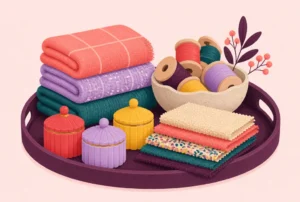
Towel and Laundry Folding
Also called: Folding Basket
A purposeful task: folding a basket of warm, clean towels or napkins, done at the person’s own pace and in their own way.
How to run it
You need
A basket of clean hand towels, washcloths or napkins, a table.
Setup
Bring a basket of clean towels, still warm from the dryer if you can. Sit at a table beside the person, not across from them.
How to run it
- Invite help: “Could you give me a hand with these?”
- Fold one yourself, slowly, so the person can watch.
- Hand over a towel and let the person fold it however they like.
- Stack the folded towels neatly and thank them for the help.
Care and dignity
- Never refold someone’s towels in front of them. Their way is the right way.
- Use clean laundry only, and avoid items with small buttons or loose threads for anyone who mouths objects.
Adapt it
- Later-stage: smoothing a towel flat or holding a warm one is enough.
- Hands: washcloths and napkins are easier than bath towels for weak grips.
- Vision: use solid-color towels against a contrasting tablecloth.
Facilitator tips
- Real tasks are more inviting than make-work. If the towels are actually used later, say so.
- Some people prefer matching socks or rolling yarn; keep a basket of each.
Variations
- Matching pairs of clean socks.
- Rolling a ball of yarn while the leader holds the skein.
Sorting Tray
Also called: Sorting Basket, Sort and Match
Sorting a mixed basket of large, everyday items by color, shape or type into a divided tray.
How to run it
You need
A muffin tin or divided tray, large items to sort: big plastic poker chips, fabric squares, plastic cutlery, large wooden spools, playing cards by suit.
Setup
Choose items that are large enough not to fit in a mouth and are pleasant to handle. Put them in a basket next to a divided tray.
How to run it
- Show how to sort one or two items: “The red ones go here.”
- Hand over the basket and let the person carry on.
- Talk about the items as you go, but don’t correct mistakes.
- When the basket is empty, mix everything back up if they’d like to go again.
Care and dignity
- Choking: use items larger than a golf ball for anyone who may put things in their mouth. No buttons, beads or coins in memory care.
- Stay with the person throughout.
Adapt it
- Later-stage: sorting into just two groups, like light and dark, keeps it failure-free.
- Memory: for people with milder impairment, sorting playing cards by suit and then in number order adds a challenge.
- Vision: strong colors and contrasting tray compartments.
Facilitator tips
- Tools from a person’s past job make sorting more meaningful: nuts and large bolts for a mechanic, spools for a seamstress (checked for size).
- There’s no wrong answer. If someone makes up their own system, follow it.
Rummage Box
Also called: Memory Box, Busy Box, Theme Box
A box of themed items to look through, hold and talk about, ready for a quiet moment or a one-to-one visit.
How to run it
You need
A sturdy box or drawer, themed items: gardening gloves, seed packets and a trowel; or a hat, scarf, handbag and compact; or a tape measure, sandpaper block and a padlock with key.
Setup
Build a few boxes around interests in the group: gardening, office work, sewing, fishing, baking, travel, sports. Personalize a box for one resident using their care plan and family input.
How to run it
- Set the box on the table or lap and open it together.
- Let the person take things out in any order. Follow their lead.
- Name each object and ask a gentle question: “What would you use this for?”
- Put the items back together when finished.
Care and dignity
- No sharp items, small parts, medicines, toiletries or anything that looks like food unless it’s real and safe to eat.
- Check items after each use and wash or wipe them.
Adapt it
- Later-stage: one or two soft, safe items, like a scarf or a smooth wooden spoon, are enough.
- Vision: choose items that are good to touch, with different weights and textures.
- Memory: label the box on the outside so staff on any shift can offer it.
Facilitator tips
- Rummage boxes can help during restless times of day. Keep one on each unit.
- Rotate items every few weeks so the box stays interesting.
Scent Jars
Also called: Smell and Tell, Aroma Guessing
Small jars of familiar kitchen and garden scents are passed around to smell, guess and talk about.
How to run it
You need
6 to 10 small jars with lids, cotton balls, scents: vanilla, cinnamon, coffee grounds, lemon peel, peppermint, fresh-cut grass, orange, pine.
Setup
Put each scent in a jar on a cotton ball or in a cloth bag. Cover jars with paper so contents can’t be seen. Number the lids and keep an answer key.
How to run it
- Open one jar at a time and hold it a few inches from the person’s nose.
- Ask, “What does this smell like to you?”
- Reveal the answer and ask where they’ve smelled it: a kitchen, a barn, a holiday.
- Move through the jars at an easy pace.
Care and dignity
- Check for allergies, asthma and breathing problems before using scents. Skip strong essential oils and sprays.
- Keep jars out of reach between sessions, and use contents that are safe if tasted.
- Our sense of smell often fades with age. If someone can’t smell a jar, move on lightly.
Adapt it
- Later-stage: one familiar scent, like coffee or lemon, offered one-to-one, with a simple “Do you like that?”
- Vision: no sight needed; it’s a good fit for people with low vision.
- Memory: scent often brings a story with it; no right answer is required.
Facilitator tips
- Seasonal sets work well: pumpkin spice and apple in fall, pine and peppermint in winter.
- Pair a scent with a photo: coffee with a picture of a diner counter.
Texture Basket
Also called: Touch and Feel, Fabric Squares
A basket of different textures to touch and talk about, designed for quiet one-to-one time or a very small group.
How to run it
You need
A basket of fabric squares and textured items: velvet, corduroy, satin, burlap, fleece, a smooth stone, a pine cone, a wooden spoon.
Setup
Cut fabric squares about 8 inches across and hem or pink the edges. Add a few large natural items, cleaned. Keep the basket in a quiet room.
How to run it
- Offer one item at a time, placing it in the person’s hand.
- Name it: “This is velvet. It’s soft.” Ask, “How does it feel?”
- Compare two textures: rough and smooth, cool and warm.
- Let the person keep a favorite to hold for a while.
Care and dignity
- Everything must be too big to swallow. Check pine cones and stones for size and sharp points.
- Wash fabrics between people.
Adapt it
- Later-stage: holding one soft square may be the whole activity. That’s a full session.
- Vision: rich colors help, but touch carries it.
- Hands: lay fabrics flat on the lap for people who can’t grip.
Facilitator tips
- A fabric from someone’s past, like a work shirt flannel or a dress satin, can mean more than any store-bought kit.
Music Listening Time
Also called: Music and Memories, Listening Session
A quiet session of listening to familiar music, in a small group or one-to-one with headphones, with a little talk between songs.
How to run it
You need
Music player and good speaker or headphones, a playlist of songs the person knows.
Setup
Ask families and the person themselves about favorite songs, singers and styles. Build a short playlist of six to ten songs. Pick a quiet room.
How to run it
- Introduce each song with its title and a sentence about it.
- Play it all the way through. Let people tap, hum or sit quietly.
- Between songs, ask an open question: “Where would you hear this?”
- End with a calm song and lower the volume slowly.
Care and dignity
- Never leave someone alone with headphones on. Check that volume is moderate and that they can remove them.
- Watch for sadness; some songs carry heavy memories. Switch songs gently if needed.
- Respect taste. A person’s own music is better than what the leader thinks they should like.
Adapt it
- Later-stage: one-to-one with headphones, staff watching for comfort. Short sessions of 10 to 15 minutes.
- Hearing: headphones can work better than room speakers; check hearing aid comfort.
- Memory: familiar songs from someone’s young adult years tend to be the most recognized.
Facilitator tips
- Keep each person’s playlist written in their care plan so every shift can use it.
- Playing music is different from copying it. Use a licensed streaming service or recordings you own, and don’t share copies.
Hand Care Visit
Also called: Hand Lotion and Chat, Hand Pampering
A one-to-one visit where the staff member or volunteer gently rubs lotion into the person’s hands while chatting or listening to music.
How to run it
You need
Unscented or lightly scented hand lotion approved for the person, a soft towel, optional warm damp washcloth.
Setup
Ask permission first, every time. Check the care plan for skin conditions, allergies and any lotion restrictions. Sit side by side.
How to run it
- Ask, “Would you like some lotion on your hands?” Accept a no.
- Warm a small amount of lotion in your own hands.
- Smooth it over the back of the hand, then the palm and fingers, with light pressure.
- Talk about their hands: the work they’ve done, any rings, what they used to make.
- Wrap the hands in the soft towel for a minute at the end.
Care and dignity
- Use light pressure only. Older skin bruises and tears easily; avoid any broken skin, sores or swelling.
- Follow your facility’s policy on touch and on who may apply lotion. This is a comfort visit, not massage therapy.
- Stop right away if the person pulls away or seems uncomfortable.
Adapt it
- Later-stage: touch and a calm voice may be the whole conversation.
- Hearing: sit on the better-hearing side and keep your face in view.
- Vision: say what you’re about to do before touching.
Facilitator tips
- Pair with music listening for a calm late-afternoon visit.
Potting Herbs
Also called: Windowsill Garden, Planting Day
Seated at a covered table, the group plants herb seedlings in small pots to keep on a windowsill and tend in the weeks after.
How to run it
You need
Small pots, potting soil, herb seedlings such as basil, mint, parsley, trays or newspapers, scoops, watering can, aprons or gloves.
Setup
Cover tables with newspaper or trays. Put soil in a big bowl in the middle of each table with scoops. Check that tables are at a height wheelchairs fit under.
How to run it
- Pass the seedlings around to smell and touch.
- Scoop soil into each pot until it’s about half full.
- Set the seedling in, then add soil around it and press it down.
- Water lightly and label each pot with the herb and the gardener’s name.
- Choose a sunny windowsill and set up a watering schedule.
Care and dignity
- Some potting mixes contain fertilizers or fine particles. Wear gloves if the care plan calls for it, wash hands after, and keep soil away from anyone who might eat it.
- Use plants that are safe if nibbled. Basil, mint and parsley are common kitchen herbs; skip ornamental plants with unknown toxicity.
Adapt it
- Hands: wide-handled scoops and a funnel help; gloves are optional.
- Memory: hand over one step at a time; staff can do the first scoop.
- Mobility: everything happens at the table; nobody kneels or bends to the ground.
Facilitator tips
- Use the herbs later in a cooking group, or just snip and smell them.
- Watering becomes a daily job someone can own.
Music, art, writing and cooking 8 activities
Singing, painting, poetry, a radio play and a no-bake recipe, plus seasonal crafts for the holidays. Every project uses adult materials and has no wrong way to finish.

Old Songs Sing-Along
Also called: Sing-Along, Song Circle
The group sings old favorites together from large-print song sheets, with a piano, guitar or recording to follow.
How to run it
You need
Large-print song sheets of public-domain songs, piano, guitar or a recording.
Setup
Choose eight to twelve songs published before 1929 or traditional folk songs, so the words can be printed freely. Examples: “Take Me Out to the Ball Game” (1908), “Shine On, Harvest Moon” (1908), “By the Light of the Silvery Moon” (1909), “Let Me Call You Sweetheart” (1910), “In the Good Old Summer Time” (1902), “Daisy Bell” (1892), “Oh! Susanna” (1848) and “Home on the Range.” Print words in 18-point type or larger, one song per page.
How to run it
- Start with a song most people know, to warm up voices.
- Introduce each song with its title and the year it came out.
- Sing the chorus twice so people who don’t read the sheet can join in.
- Mix fast and slow songs, and seasonal ones in season.
- Close with a gentle favorite.
Care and dignity
- Pitch songs low. Many older voices can’t reach the high notes of the original keys.
- Keep water nearby; singing dries the throat.
Adapt it
- Later-stage: familiar songs from early life are often still within reach. Sit close, sing simply, and accept humming or tapping.
- Vision: people who can’t read the sheet can still sing choruses from memory.
- Hearing: keep accompaniment simple and not too loud, and sing a little slower.
Facilitator tips
- The words of pre-1929 songs are in the public domain in the US, but a modern songbook’s arrangement or a recording may not be. Type the lyrics yourself from an old source.
- Write the song list on the board so people can call for the next one.
Variations
- Seasonal set: “Jingle Bells” (1857) and “Auld Lang Syne” (traditional) in December.
Group Poem
Also called: Shared Poem, Poetry Circle
The leader asks open questions on a theme, writes down people’s words, and shapes them into a poem the group reads aloud.
How to run it
You need
Whiteboard or large pad, markers, optional object or photo as a prompt.
Setup
Pick a theme with lots of senses in it, such as rain, a kitchen in the morning, the first warm day of spring. Bring a prop if you have one, like a lemon or a raincoat.
How to run it
- Ask sense questions about the theme: “What does rain sound like? What does it smell like? Where were you when it rained?”
- Write every answer exactly as said, with the speaker’s initials if they like.
- Read the answers back and arrange them into lines with the group’s help.
- Give the poem a title together.
- Read the finished poem aloud, then type and post it with all the poets’ names.
Care and dignity
- Keep people’s exact words. Tidying them up takes away their ownership.
- Ask before posting anyone’s name.
Adapt it
- Memory: sense questions about the present (this lemon, this rain) need no recall.
- Later-stage: one or two words from a person can be a line.
- Hearing: repeat each answer as you write it.
Facilitator tips
- Poems don’t need to rhyme. Say so at the start.
- Repeating one line, like “I remember rain,” at the start of each verse gives the poem a shape.
Variations
- Acrostic poem: write the theme word down the board and fill a line for each letter.
Magazine Collage
Also called: Picture Collage, Theme Collage
Group members cut or tear pictures from magazines on a theme and glue them onto a board to make one big collage or small personal ones.
How to run it
You need
Old magazines and catalogs, safety scissors or pre-cut pictures, glue sticks, poster board or heavy paper.
Setup
Choose a theme: gardens, dream vacations, favorite foods, the four seasons. Pre-cut a pile of pictures for anyone who can’t use scissors. Cover the tables.
How to run it
- Show the theme and a few sample pictures.
- Let people flip through magazines and pick pictures they like.
- Cut, tear or choose from the pre-cut pile.
- Arrange the pictures on the board before gluing.
- Glue, then hang the collage and talk about the choices.
Care and dignity
- Watch glue sticks and paper scraps with anyone who might put things in their mouth.
- Pick adult magazines (gardening, cooking, travel) rather than children’s materials.
Adapt it
- Hands: tearing works as well as cutting; spring-loaded scissors help weak grips.
- Memory: pre-cut pictures and one step at a time.
- Vision: large, bright pictures and magazines with less text.
Facilitator tips
- A group collage on one big board makes a strong hallway display.
- Ask each person to say one thing about a picture they chose.
Watercolor Wash Painting
Also called: Wet-on-Wet Painting, Color Wash
Painters wet the paper, then drop and brush color onto it so the paint spreads and blends, with no drawing skill needed.
How to run it
You need
Watercolor paper, watercolor paints or liquid watercolors, wide soft brushes, water cups with weighted bases, paper towels, aprons.
Setup
Tape paper to the table at the corners. Fill water cups half full. Set out three or four colors that look good mixed, like blue, purple and yellow.
How to run it
- Brush clean water over the whole paper.
- Dip the brush in a color and touch it to the wet paper. Watch it spread.
- Add a second color next to it and let them blend.
- Keep going until the paper is full, or stop at any point.
- When dry, the paintings can become cards, bookmarks or a framed set.
Care and dignity
- Use non-toxic paints, and keep water cups apart from drinking cups.
- Aprons protect clothing; people may care a lot about their clothes. Ask before putting one on.
Adapt it
- Later-stage: hand-over-hand only with permission; often a brush placed in the hand and a nudge of the cup is enough.
- Hands: wide foam brushes with thick handles are easier to hold.
- Vision: strong, saturated colors on white paper.
Facilitator tips
- There’s no wrong result. Admire color choices, not accuracy.
- Sprinkle a pinch of salt on wet paint for a starry effect.
Holiday Card Workshop
Also called: Card Making, Greeting Cards
The group makes greeting cards for an upcoming holiday or occasion, to send to family, staff or a local organization.
How to run it
You need
Folded card stock, stamps and ink pads, stickers, ribbon and pre-cut shapes, glue sticks, markers, envelopes.
Setup
Pre-fold cards and set out bins of materials by type. Have a few finished samples on the table. Decide who the cards are for, such as a local veterans’ group or a children’s hospital, or each person’s own family.
How to run it
- Show the samples and the materials.
- Each person picks a card and decorates the front.
- Help with the message inside: offer a few short phrases on a board to copy.
- Address envelopes or bundle cards for delivery.
- Post a photo of the finished cards on the activity board.
Care and dignity
- Tie the occasion to the calendar without assuming everyone celebrates the same holidays. Offer neutral cards (thank you, thinking of you, happy season) as well.
- Small sequins and beads are choking risks; leave them out in memory care.
Adapt it
- Hands: rubber stamps with large handles, and peel-off stickers.
- Memory: one decoration at a time, with a finished sample to copy.
- Vision: thick black markers and high-contrast card stock.
Facilitator tips
- Cards with a real recipient and a real mailbox give the work a purpose.
- Make the same session work for birthdays and get-well cards through the year.
No-Bake Fruit Parfaits
Also called: Yogurt Parfait Bar, Cooking Group
A simple cooking group where people layer yogurt or pudding with soft fruit in clear cups, then eat what they made.
How to run it
You need
Clear cups, spoons, yogurt or pudding, soft fruit such as bananas, berries or canned peaches, optional crushed graham crackers or granola, aprons, hand-washing supplies, printed recipe card.
Setup
Check every participant’s diet orders, food allergies and texture requirements before planning. Wash hands. Set out ingredients in bowls with serving spoons, and a large-print recipe card on each table.
How to run it
- Read the recipe card aloud together.
- Slice soft fruit with a butter knife, or start with pre-cut fruit.
- Spoon a layer of yogurt into the cup, then a layer of fruit.
- Repeat until the cup is full, and top with a little crumble if diets allow.
- Enjoy them together and talk about favorite desserts.
Care and dignity
- Diet orders come first. Check thickened-liquid orders, diabetes plans, allergies (nuts, dairy, gluten) and texture levels with the care team.
- Whole grapes, nuts and hard granola are choking risks. Cut fruit small and soft for anyone with swallowing concerns.
- Follow food-safety rules: wash hands, keep dairy cold, and eat within the session.
Adapt it
- Memory: give one step at a time, with the finished parfait as an example.
- Hands: wide-handled spoons and cups with a weighted base.
- Later-stage: tasting a spoonful of smooth yogurt and fruit that fits the diet order, and stirring a bowl, is a full session.
Facilitator tips
- Smells and tastes from childhood kitchens get people talking. Ask about desserts they used to make.
- Write the recipe on a card people can take home or send to family.
Variations
- Seasonal swap: pumpkin pudding with spice in fall, berries in summer.
Rhythm Circle
Also called: Drum Circle, Rhythm Band
Seated players use simple percussion to keep time with music or follow the leader’s rhythms, call and answer.
How to run it
You need
Hand drums, shakers, tambourines, rhythm sticks, music player.
Setup
Pass out instruments, offering a choice. Sit in a circle so everyone can see the leader.
How to run it
- Start with a steady beat together: tap, tap, tap, tap.
- The leader plays a short rhythm and the group copies it.
- Play along to a march or a song with a strong beat.
- Try loud and soft, fast and slow.
- End with a big shared finish on the count of three.
Care and dignity
- Keep volume moderate. Loud drumming in a small room can overwhelm people.
- Egg shakers are small; use larger shakers with anyone who might put them in their mouth.
Adapt it
- Later-stage: a shaker placed in the hand; any movement makes sound and counts.
- Hands: shakers and egg shakers need little grip; drums can be played with a flat hand.
- Hearing: drums carry low tones people can feel.
Facilitator tips
- Pass the lead around: anyone can play a rhythm for the group to copy.
- Instruments can come from the kitchen: a pot and wooden spoon, a jar of rice with a tight lid.
Radio Play Reading
Also called: Reader's Theater, Play Reading
Readers sit around a table and perform a short script aloud, like an old radio drama, with someone handling the sound effects.
How to run it
You need
Large-print scripts of a short original or public-domain play, simple sound-effect items: a bell, a door knock, a coconut shell for hoofbeats.
Setup
Use a short script that’s public domain or written by staff or the group itself. Print it in large type with each role highlighted in a different color. Assign parts ahead of time, with an option to just listen.
How to run it
- Read the title and cast list aloud.
- Readers read their parts from their seats. Nobody has to memorize.
- The sound-effects person adds knocks, footsteps and bells on cue.
- Take a short break halfway and talk about what might happen next.
- Finish with applause and a chat about the characters.
Care and dignity
- Nobody reads unless they want to. Audience members are part of the show.
- Check that the script’s content suits the group.
Adapt it
- Vision: highlight each reader’s lines and use 16-point type or larger.
- Hearing: seat readers close together with a small microphone if available.
- Memory: short scenes of 10 minutes; a narrator role can be shared by the leader.
Facilitator tips
- Ask the group to write the next episode together for next week.
- Record a performance, with permission, and play it back at the next session.
Large-group and special events 7 activities
Bigger events for the dining room or activity hall: team trivia, a dice horse race, a minute-challenge afternoon, theme days and discussion groups. Plan these a week or more ahead and put them on the calendar.
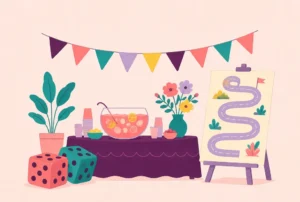
Team Trivia
Also called: Trivia Afternoon, Quiz Teams
Tables play as teams and answer rounds of questions on set categories, with answers written down and scored round by round.
How to run it
You need
Answer sheets and pencils, a whiteboard for scores, questions written by the leader from reliable sources.
Setup
Seat four to six people per table, mixing strong readers and writers with others. Pick five categories, such as geography, food, the calendar, music titles and the local town, and write five questions for each from an encyclopedia, almanac or official source. Check every answer.
How to run it
- Each team picks a name; write the names on the board.
- Read each question twice. Teams talk quietly and write their answer.
- After five questions, read the answers and teams score their own sheets.
- Post scores after each round.
- End with a final round where teams can bet up to 10 points on one question, and announce the winning table.
Care and dignity
- Team scoring means no single person’s answer is on display.
- Avoid questions that rely on very recent events; they can make people feel out of touch.
Adapt it
- Hearing: put each question on the board as you read it.
- Memory: team play spreads the load. Mixed tables let everyone add something.
- Vision: a table helper can read and write for the team.
Facilitator tips
- Don’t want to write questions? Ask each table to write three questions for the other teams, with answers, then play their questions.
- A local round (town history, street names, old landmarks) gets the most talk.
Variations
- Picture round: show large photos of famous places and ask where they are.
Dice Horse Race
Also called: Horse Race Game, Derby Day
Horses numbered 2 to 12 race down a track; each roll of two dice moves the matching horse a step forward, and the room cheers its horse home.
How to run it
You need
Two large dice, a track: tape or a long paper strip with 10 to 12 spaces per lane, 11 paper horse cutouts numbered 2 to 12, small tokens or paper tickets for points.
Setup
Lay a track on a table or wall with 11 lanes numbered 2 to 12 and 10 spaces each. Give each person or table a horse number, or let them pick one for points. Announce that this is for points or small prizes, never money.
How to run it
- Each person or table chooses a horse number, drawn from a hat.
- A resident rolls the two dice and calls out the total.
- The track helper moves that horse one space forward.
- Keep rolling until one horse crosses the finish line. That horse’s backers win the round.
- Run three or four races with new horse draws each time.
Care and dignity
- Play for points or small prizes only, never money.
- Seven comes up most often with two dice, and 2 and 12 rarely. Drawing horses from a hat keeps it fair, and you may want a small prize for the last-place horse too.
Adapt it
- Vision: a big track on a wall or easel and loud calls of each roll.
- Memory: give each person a large card showing their horse number.
- Hands: dice can be rolled from a cup into a large box lid.
Facilitator tips
- Name the horses with the group, and have someone call the race like an announcer.
- Hats, ribbons and a snack table make it a themed event.
One-Minute Challenge Afternoon
Also called: Sixty-Second Games
A series of one-minute seated challenges, like stacking cups or clipping clothespins, played by teams for points.
How to run it
You need
A timer, materials for 6 to 8 seated tasks: plastic cups, cotton balls and a spoon, a deck of cards, clothespins and a string, large nuts and bolts, a ball, scoreboard.
Setup
Set up six to eight stations or bring each challenge to the tables. Write the challenges on the board. Test each one first so it’s possible in a minute from a chair.
How to run it
- Explain the first challenge and show it once.
- Start the timer. Players or teams try to finish or score as much as they can in one minute.
- Write the results on the board.
- Move through the rest of the challenges, with a break halfway.
- Total team points and give out small prizes.
Care and dignity
- Keep stakes low and laughs high. Nobody is ever “out.”
- Avoid tasks with small objects in memory care, and any task that involves bending to the floor.
Adapt it
- Mobility: every task is done at a table or on a lap.
- Hands: offer two versions of each task, such as big and small clothespins.
- Memory: one task at a time, shown before it’s timed.
Facilitator tips
- Good challenges: stack 10 cups in a pyramid; move cotton balls between bowls with a spoon; clip clothespins on a line; sort a deck of cards by color; thread large bolts into nuts.
- Use a big, visible timer and count the last 10 seconds aloud.
Theme Day
Also called: Special Event Day
A whole afternoon built around one theme, such as a seaside day, a county fair, a diner, a garden party or a harvest festival, with music, food, decorations and games to match.
How to run it
You need
Decorations for the theme, theme music, theme snacks that meet diet orders, activities from this library chosen to match.
Setup
Pick a theme a month ahead and put it on the calendar. Plan decorations, a playlist, a snack that suits diet orders, and two or three activities from this library. Invite families and volunteers.
How to run it
- Decorate the room the morning of the event.
- Open with music and a short welcome that explains the theme.
- Run two or three themed activities: a sing-along, a game and a hands-on task.
- Serve the theme snack partway through.
- Close with a group photo, with permission, and a calm song.
Care and dignity
- Big events can overwhelm some people. Have a quiet room nearby and staff ready to step out with anyone who needs a break.
- Check every snack against diet orders and texture levels.
- Holiday themes: offer events for a range of traditions, or seasonal themes that leave no one out.
Adapt it
- Later-stage: bring the theme to rooms with a small piece of it, like a seashell to hold or a summer song.
- Hearing: keep background noise down during talks and games.
- Mobility: plan everything to be done seated.
Facilitator tips
- Theme ideas: a county fair with a pie table and blue ribbons, a diner with paper hats, a beach day with sand in a tub for feet, a garden party with flowers to arrange.
- Ask residents to vote on next month’s theme.
Leisure Discussion Group
Also called: Leisure Education, Free Time Talk
A discussion group where people talk about what makes free time good for them, look at the options available, and try one new thing.
How to run it
You need
Whiteboard, a calendar of upcoming activities, a sheet listing local resources: library, senior center, parks.
Setup
Run as a weekly series of four to six sessions. Each session has one question, such as “What did you do for fun at 30?” or “What would you like to learn?”
How to run it
- Start with the week’s question and write answers on the board.
- Talk about what got in the way of hobbies before, and what gets in the way now.
- Look at the activity calendar and local options together.
- Each person picks one thing to try that week, or chooses to watch for now.
- Next session, start by hearing how it went.
Care and dignity
- Some people have lost hobbies to illness or a move. Listen, and look for ways a hobby can come back in a new form.
- Never push. Choosing not to join an activity is a choice too.
Adapt it
- Hearing: small group, close seating, written notes on the board.
- Memory: give each person a card with their choice for the week.
- Mobility: include options that come to the person, like books, music or a visiting program.
Facilitator tips
- Recreation therapy students can use this as a practicum group.
- Invite a former participant to share a hobby they picked up.
Joke and Riddle Circle
Also called: Humor Hour, Laugh Circle
The group takes turns reading or telling clean jokes and riddles from cards, and swaps favorite funny stories.
How to run it
You need
A stack of clean jokes and riddles written on cards, optional funny photos.
Setup
Write 30 or so clean, old-fashioned jokes and riddles on large-print cards. Avoid jokes about age, memory loss, illness or any group of people.
How to run it
- Read the first joke yourself to set the tone.
- Pass the card stack around. Anyone can read one or pass the stack on.
- For riddles, give the group time to guess before the answer.
- Invite people to tell a joke they know, or a funny thing that happened at work or home.
- Close with the corniest joke in the pile.
Care and dignity
- Screen jokes beforehand; nobody should be the butt of a joke.
- Laugh with, never at.
Adapt it
- Hearing: put the punchline on the board after it’s read.
- Memory: short riddles with a picture answer work well.
- Vision: a staff member reads cards for anyone who can’t.
Facilitator tips
- Groan-worthy puns get the room going. A bad joke is a good joke here.
- Start a joke book from the group’s own contributions.
Hobby Show and Tell
Also called: Collections Day, Hobby Fair
Residents, staff and family members bring something from a hobby or collection, set up a small display, and talk about it with the group.
How to run it
You need
Tables for displays, name cards, items residents, staff and families bring: quilts, photos, stamps, model trains, recipes, tools.
Setup
Invite people two weeks ahead and give everyone the option to bring a photo of a hobby instead of the real thing. Set up tables around the room, each with a name card.
How to run it
- Give people time to set up their displays, with help.
- Let the room walk or wheel around the tables for 15 minutes, or bring items to people who stay seated.
- Invite each presenter to say a few words about their hobby, or answer a couple of questions from the leader.
- Close by asking who would like to try one of the hobbies, and note any ideas for future activity groups.
Care and dignity
- Label valuables and keep them on display tables, not passed around. Return everything to its owner at the end.
- Nobody has to present. Visiting the tables is a full part of the event.
Adapt it
- Mobility: staff carry small items to anyone who can’t move around the room.
- Hearing: presenters speak into a microphone or stand close to the group.
- Memory: a leader can interview a presenter with simple prompts: “How did you start? What’s your favorite piece?”
Facilitator tips
- Staff hobbies count too. A staff member’s knitting or fishing flies can start long conversations.
- Collections can lead to new groups: a card club, a garden club, a quilting circle.
Sample activity plans
Four ready-made sessions built from activities on this page. Swap in your residents’ favorites; the shape matters more than the specific games. Add a plan to your print list and the PDF starts with a one-page run sheet.
- Start with something easy. A warm-up or a familiar song lets late arrivals join without feeling behind.
- Put the thinking activity early. Attention is usually best in the first half of a session and earlier in the day.
- Alternate seated focus and movement, and build in a water break.
- End on success. Close with something everyone can do, so the last feeling is a good one.
Assisted living morning group, 60 minutes
8 to 15 independent or mildly impaired residents, an activity room · 60 minutes
- Coffee and arrival chat5 min
- Mirror MovesSeated warm-up10 min
- Alphabet CategoriesWord game15 min
- Water break5 min
- Seated BowlingSeated game15 min
- This or ThatClosing conversation10 min
Start with movement while people settle, put the thinking game when attention is freshest, then move to something active and social. A light talk game closes the hour without pressure.
Memory care small group, 38 minutes
4 to 8 residents with moderate impairment, a quiet room · 38 minutes
- Greeting each person by name3 min
- Old Songs Sing-AlongSing-along of three familiar songs10 min
- Seated Parachute WavesParachute waves7 min
- Towel and Laundry FoldingFolding together10 min
- Music Listening TimeQuiet music to close8 min
Music first, since familiar songs often draw people in. Gentle movement follows, then a calm, purposeful task, and quiet music to end so nobody leaves wound up.
One-to-one room visit, 18 minutes
One resident in their room, any cognitive level including later-stage · 18 minutes
- Knock, greet and sit at eye level2 min
- Hand Care VisitHand lotion and chat6 min
- Rummage BoxLook through a theme box together6 min
- Music Listening TimeA favorite song or two4 min
Touch, objects and music each offer a way in that doesn’t depend on words. Follow the person’s lead and drop any part that isn’t working.
Monthly social event, 85 minutes
20 or more residents with families and volunteers, a dining room or hall · 85 minutes
- Welcome, refreshments and seating10 min
- Chair DancingChair dancing warm-up10 min
- Team TriviaTeam trivia20 min
- Water and snack break10 min
- Dice Horse RaceDice horse race20 min
- Joke and Riddle CircleJoke circle5 min
- Old Songs Sing-AlongSing-along to close10 min
A big event needs a warm-up, a thinking game while energy is high, a break, and a game the whole room can cheer for. Ending with a sing-along brings everyone together before people head back.
Adapting activities to abilities
Every activity on this page has its own adaptation notes. These are the principles underneath them. Your residents’ care plans, diet orders and therapy recommendations come first; where they say something different, follow them.
| Need | What to change | Examples on this page |
|---|---|---|
| Low vision | Large, high-contrast print (18-point or bigger, black on white or cream), good light without glare, seats near the leader, read everything aloud. | Large-Print Bingo, Alphabet Categories |
| Hearing loss | Face the group, lower the background noise, repeat answers, write key words on a board, use gestures and visual cues for starts and stops. | Mirror Moves, Picture Talk |
| Limited mobility | Plan the seated version first. Sturdy chairs with arms, wheelchair brakes on, targets brought within reach, no overhead reaching for anyone with shoulder limits. | Seated Parachute Waves, Seated Bowling |
| Hand weakness or tremor | Bigger, lighter pieces; card holders; thick markers; tasks that don’t need fine pinching. | Dominoes, Towel and Laundry Folding |
| Mild memory loss | One step at a time, the rules on a card in front of each player, games that lean on long-held knowledge, no penalties for forgetting. | Finish the Saying, Theme Talk |
| Moderate to later-stage dementia | Short sessions, one-to-one or very small groups, familiar objects and music, purposeful tasks with no wrong way to do them, and the freedom to stop at any time. | Rummage Box, Music Listening Time |
Principles that hold for every group
- Failure-free beats challenging. Choose activities where any answer or effort counts, and drop scoring when it causes stress. The National Institute on Aging’s guide to adapting activities for people with Alzheimer’s makes the same point: match the activity to what the person can still do and enjoy.
- Adult materials, adult language. Use real objects and grown-up themes. Avoid anything that looks like a children’s worksheet.
- Ask, don’t test. “Tell me about your first car” invites a story; “Do you remember…” can feel like an exam.
- Choice is part of the activity. Offer two options, accept a no, and treat watching as taking part.
- Watch the clock and the person. Stop while it’s still going well, and watch for tiredness, pain or frustration.
- Check safety basics. Small objects and food are choking risks for some people with later-stage dementia; latex balloons are an allergy risk; follow diet textures and fluid orders for any food activity.
Reminiscence question bank
105 open questions in 12 themes, written to start conversations rather than test memory. Use them with Theme Talk, at a one-to-one visit, or on the back of a calendar page. Questions avoid assuming marriage, children, a home country or a religion; adjust them to the person in front of you.
School days
- Tell me about the first school you went to.
- What was the walk or ride to school like?
- What was your favorite subject, and why?
- Tell me about a teacher who stood out.
- What did you eat for lunch at school?
- What games did you play at recess?
- What did you wear to school?
- What was the hardest thing about school for you?
- What did you do after school let out?
First jobs and working life
- Tell me about your very first job, paid or unpaid.
- How did you find work back then?
- What was a normal day like at that job?
- Tell me about a boss or coworker you remember well.
- What did you buy with your first pay?
- What skill from work are you proudest of?
- What did you wear to work?
- What was the funniest thing that happened on the job?
- If you could do any job for one day, what would it be?
Kitchens and recipes
- Tell me about the kitchen in the home where you grew up.
- Who did most of the cooking, and what did they make best?
- What dish do you think of as yours?
- What did a typical supper look like?
- Tell me about a dish you didn't like as a child.
- What was always on the table for special meals?
- What smells come to mind when you think of that kitchen?
- What's a kitchen tool you used all the time?
- What recipe would you want to pass on?
Music and dancing
- What music was playing in your home growing up?
- Tell me about a singer or band you liked as a young person.
- Where did people go to hear music or dance?
- What dances were popular when you were young?
- Tell me about a song that takes you back to a certain time.
- Did anyone in your life play an instrument? Tell me about it.
- What's a song you could sing every word of?
- What music do you like to hear now?
Holidays and celebrations
- What holiday or celebration mattered most where you grew up?
- Tell me about the food that went with it.
- What decorations went up, and who put them up?
- What was your favorite part of the day?
- Tell me about a gift you gave or got that stuck with you.
- What traditions did your household have that others might not?
- How did you mark birthdays?
- What's a holiday tradition you'd keep forever?
- What did New Year's look like for you?
Cars and travel
- Tell me about the first car you rode in or owned.
- Who taught you to drive, or how did you get around?
- What was the longest trip you took?
- Tell me about a road trip, train ride or bus ride you remember.
- Where did people go on vacation when you were young?
- What place would you love to see again?
- What did you pack for a trip?
- What car did everyone want back then?
- Tell me about a place you've always wanted to visit.
Homes and neighborhoods
- Tell me about the street you grew up on.
- What did the house or apartment look like?
- Who were the neighbors, and what were they like?
- Where did people shop in your neighborhood?
- What did kids do for fun outside?
- Tell me about a favorite room or spot in that home.
- What sounds did you hear at night?
- What did a Saturday look like there?
- What's a place from your neighborhood that isn't there anymore?
Sports and games
- What games did you play as a child?
- Tell me about a sport you played or watched.
- What team did you root for, and why?
- Tell me about a game or match you went to in person.
- What card or board games were played in your home?
- Who was the best player you ever saw?
- What outdoor games did the neighborhood play?
- What's a game you'd still like to play?
Pets and animals
- Tell me about a pet or animal you knew well.
- What was its name, and how did it get that name?
- What animals were around where you grew up: farm animals, strays, birds?
- Tell me about the funniest thing an animal ever did around you.
- Who took care of the animals in your household?
- Are you a dog person, a cat person, or neither?
- What animal would you have if you could have any?
- Tell me about wildlife you liked to watch.
Fashion and clothes
- What did people wear on an ordinary day when you were young?
- Tell me about a favorite outfit you owned.
- What did you wear when you dressed up?
- What hairstyles were popular back then?
- Where did you buy clothes, or who made them?
- Tell me about a fashion you loved that's gone now.
- What did people wear for dressy occasions?
- What's a piece of clothing you kept for years?
- What's a style today that surprises you?
Weddings and big celebrations
- Tell me about a wedding you went to, yours or anyone's.
- What food was served at big celebrations?
- Tell me about a party you remember well.
- What did people wear to a big celebration?
- Where did people hold parties in your town?
- What music did people dance to at celebrations?
- Tell me about a toast, speech or moment that stuck with you.
- What makes a good party, in your view?
- What's a milestone you celebrated that made you proud?
Seasons and weather
- What's your favorite season, and why?
- Tell me about winters where you grew up.
- What did summer days look like?
- Tell me about a big storm you remember.
- What did you do on a rainy day?
- What was the first sign of spring where you lived?
- What foods come to mind for each season?
- What did fall look like where you grew up?
- What would a good summer afternoon look like for you?
Activity cards, calendar and printables
Every activity prints as a half-page card with setup, steps, care notes, adaptations and tips, two cards to a sheet. Print your list, the activities your filters show, or the whole library. The calendar maker prints a blank monthly activity calendar for any month. Everything is built in your browser; nothing is uploaded.
Ready-made PDFs of all 52 cards: US Letter · A4. Print at 100% (“Actual size”). More help: printing tips.
Monthly activity calendar
A blank landscape month grid with large dates, room to write two or three activities a day, and a notes box.
Large-print games
Our printable games for seniors include large-print word games and puzzles, and the Game Maker builds bingo cards and word games in big type.
Participation log
A simple one-page sign-in sheet for each session: date, activity, who took part, and a notes column. Your facility’s own documentation policy comes first.
Recreation therapy and activity professional directory 43 links
Credentials, associations, journals and free public guidance for recreation therapists, activity directors and students. Every link was checked by hand in October 2026, and we recheck the list regularly. Know a current association we missed, or spot a dead link? Email hello@partygamebook.com.

Credentials and certification
Who certifies recreation therapists and activity professionals. Check what your state or province requires before you hire or apply.
- National Council for Therapeutic Recreation Certification (NCTRC)USAwards the Certified Therapeutic Recreation Specialist (CTRS) credential, with exam and recertification details.
- National Certification Council for Activity Professionals (NCCAP)USCertifies activity directors and assistants in senior care, and lists approved courses.
National and international associations
Professional bodies with conferences, standards of practice, continuing education and job boards.
- American Therapeutic Recreation Association (ATRA)USThe US association for recreational therapists: standards, advocacy, an annual conference and career information.
- National Association of Activity Professionals (NAAP)USMembership association for activity and life-enrichment staff in senior care, with education and peer support.
- National Recreation and Park Association (NRPA)USCovers public recreation, including inclusive and adaptive recreation programs run by parks departments.
- Canadian Therapeutic Recreation Association (CTRA)CanadaCanada's national association for recreation therapy practitioners, with chapters and a job board.
- National Activity Providers Association (NAPA)UKThe UK professional body for activity providers in care settings, with resources and an annual campaign.
- World Leisure OrganizationInternationalInternational association that studies and promotes leisure as part of health and well-being.
Canadian provincial associations
Provincial groups handle local standards, education days and, where it exists, regulation.
- Alberta Therapeutic Recreation AssociationCanadaProvincial association with a code of ethics, standards of practice and professional development.
- British Columbia Therapeutic Recreation Association (BCTRA)CanadaProvincial association offering continuing education, advocacy and member resources in BC.
- Therapeutic Recreation OntarioCanadaOntario's association for recreation therapists, with an event calendar and committees.
- Nova Scotia Therapeutic Recreation AssociationCanadaProvincial association with information for practitioners in Nova Scotia.
- Association québécoise pour le loisir des personnes handicapéesCanadaQuebec association promoting accessible leisure for people with disabilities (in French).
US state associations
State chapters run regional conferences and are the quickest way to find local mentors and internships. ATRA keeps the current list.
- ATRA chapter affiliates (current list)USATRA's own page of state chapters and partner organizations. Start here if your state isn't below.
- Arizona State Therapeutic Recreation AssociationUSArizona chapter affiliate of ATRA.
- Bay Area Therapeutic Recreation AssociationUSRegional association for the San Francisco Bay Area.
- Illinois Recreational Therapy AssociationUSIllinois chapter affiliate of ATRA.
- Recreation Therapists of IndianaUSIndiana's recreation therapy association.
- New Jersey Eastern Pennsylvania Therapeutic Recreation AssociationUSCovers New Jersey and eastern Pennsylvania.
- North Carolina Recreational Therapy AssociationUSNorth Carolina's association; the state licenses recreational therapists.
- Ohio Recreational Therapy AssociationUSOhio chapter affiliate of ATRA.
- Oklahoma Recreational Therapy AssociationUSOklahoma's association for recreational therapists.
- Texas Recreation and Park Society, Recreational Therapy BranchUSThe Texas branch that serves as an ATRA chapter.
- Utah Recreation Therapy AssociationUSUtah's association; Utah licenses recreational therapists.
- Washington State Therapeutic Recreation AssociationUSWashington's association for recreation therapists.
- Wisconsin Therapeutic Recreation AssociationUSWisconsin's association for recreation therapists.
Journals and research
Where the field publishes. Many university libraries give students full access.
- Therapeutic Recreation JournalUSPeer-reviewed journal of recreation therapy research and practice, with current issues and archives.
- NRPA research reportsUSFree reports on recreation participation, including older adults and inclusion.
- Canadian Centre for Activity and Aging (Western University)CanadaResearch and community programs on physical activity for older adults.
- National Center on Health, Physical Activity and Disability (NCHPAD)USFree resources on adapted exercise and inclusive recreation for people with disabilities.
Aging and dementia guidance (free, public)
Plain-language guidance from public agencies and national charities, useful for staff training and families.
- National Institute on Aging: Adapting activities for people with Alzheimer'sUSHow to match activities to changing abilities, from a US government health agency.
- National Institute on Aging: Alzheimer's caregivingUSCaregiving guides on daily care, communication and safety.
- National Institute on Aging: Exercise and physical activityUSExercise guidance written for older adults.
- CDC: Older adult activity overviewUSThe weekly physical activity guidelines for adults 65 and older, including balance work.
- Alzheimer's Association: ActivitiesUSPlanning activities at home and in care, with tips by stage.
- Alzheimers.govUSThe US government's front door to dementia information and services.
- Eldercare LocatorUSFinds local aging services, including adult day programs, by ZIP code.
- National Council on Aging (NCOA)USNonprofit resources on healthy aging, falls prevention and benefits.
- Alzheimer Society of CanadaCanadaCanada's national dementia charity, with caregiver resources.
- Alzheimer's Society: Activity ideasUKActivity ideas for people living with dementia, from the UK charity.
- World Health Organization: Ageing and healthInternationalGlobal facts on healthy ageing.
Rules for activity programs
Facilities follow their own state or provincial rules too. These are the US federal basics.
- 42 CFR 483.24(c): Activities (US nursing homes)USThe federal requirement that nursing homes run an ongoing activity program led by a qualified professional.
- CMS State Operations Manual, Appendix PPUSSurveyor guidance for nursing homes; the activities sections are tagged F679 and F680 (large PDF).
Names belong to their owners and are listed only to point you to their sites. We aren’t affiliated with any of them.
For activity professionals, instructors and librarians
No ads, no sign-up, no email wall. Free to print and copy for your residents and students.
You’re welcome to link to this page from a course guide, a library research guide, an orientation binder or a staff training handout. To cite it:
Party Game Book Editors. (2026). Activities for older adults: A library for activity professionals, with a recreation therapy directory. Party Game Book. https://partygamebook.com/senior-activities/
Party Game Book Editors. “Activities for Older Adults: A Library for Activity Professionals, with a Recreation Therapy Directory.” Party Game Book, 2026, partygamebook.com/senior-activities/.
Every activity has its own address, for example partygamebook.com/senior-activities/#rummage-box
- 52 activities in 7 types, each with group size, cognitive levels, seating, time, energy, steps, adaptations, care notes and tips.
- Original write-ups of traditional activities. We didn’t invent them and don’t claim to; the wording, adaptations and care notes are ours.
- No health claims. We describe what an activity involves, not what it treats. Clinical goals belong in the care plan.
- 43-link directory of credentials, associations, journals and public guidance, checked October 2026.
- Last reviewed: October 2026. Found a mistake? Email hello@partygamebook.com.
Sources and further reading
- National Institute on Aging, Adapting activities for people with Alzheimer’s disease.
- Alzheimer’s Association, Activities (planning activities at each stage).
- Centers for Disease Control and Prevention, Older adult activity: an overview.
- Code of Federal Regulations, 42 CFR 483.24(c), Activities (US nursing homes).
- Song dates for the sing-along list come from the songs’ original publication years; arrangements and recordings may have their own copyrights, so print the words, not sheet-music arrangements.
More free games from Party Game Book
- Printable games for seniorsLarge-print word games and puzzles to print.
- How to play classic gamesPlain rules for card, dice, domino and board games.
- The Group Games LibraryIcebreakers and get-to-know-you games for any group.
- The Game MakerMake and print your own bingo, trivia and word games.
- Printing tipsGetting cards and sheets to print at the right size.
- Troop and den gamesFor intergenerational visits with youth groups.
0 cards