57 traditional games for troop and den meetings, campouts, campfires and youth groups, sorted by where you’ll play them. Filter by group size, age, space, time and energy. Every game lists setup, rules, safety notes and leader tips, and prints as a game card.
- No ads
- No sign-up or email
- Free to print and copy for your group
Independent resource, not affiliated with any scouting organization.
Game finder
Pick what you know about your group and your space. Every filter is optional, and the results update as you go.
No games match all of those filters. Try removing one, or widen the age or group size.
Meeting-room games 8 games
Games for a church hall, school gym or community room: a taped line, a few bandanas and a clear floor. Most run in under 15 minutes, so they fit between the opening and the skills session.
Steal the Bacon
Also called: Snatch the Bandana, Steal the Flag
Two numbered teams face each other; when the leader calls a number, those two players race to grab the bandana and get it home without being tagged.
How to run it
You need
A bandana or soft object, tape or cones for two lines.
Setup
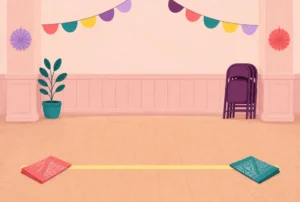
Tape two parallel lines about 30 feet apart. Split the group into two even teams, one on each line, and number each team’s players from 1 up so both teams have the same numbers. Put the bandana in the middle.
Rules
- Players stand behind their team’s line. Matching numbers should not stand directly opposite each other.
- The leader calls a number, for example “Four!”
- Both number fours run to the middle. The goal is to grab the bandana and carry it back across your own line.
- If you grab it and your opponent tags you before you cross your line, their team scores. If you get home untagged, your team scores.
- If neither player grabs it, they can feint and circle as long as they like. Call a second number to add pressure.
- Play to 10 points or until everyone has run several times.
Safety notes
- Tags are a one-hand touch on the back or shoulder, never a shove or a grab of clothing.
- Keep the play area clear of chairs and at least 10 feet from walls, so nobody slides into one going for the bandana.
Leader tips
- Call numbers so that faster and slower players meet evenly; you know who’s who.
- Calling two or three numbers at once keeps everyone involved and makes for great chaos.
- With younger kids, drop tagging: first one to touch the bandana wins the point.
Variations
- Math version: call “3 plus 2” and the fives run.
- Skills version: the first runner home must tie a square knot in the bandana before the point counts.
Crows and Cranes
Also called: Rats and Rabbits
Two teams line up at the center; the leader calls “crows” or “cranes,” and the called team runs for home while the other team chases.
How to run it
You need
Tape or cones for a center line and two safe lines.
Setup
Mark a center line and a safe line about 20 feet behind each side. Name one team Crows and the other Cranes. Teams stand on either side of the center line, a few feet back, facing each other.
Rules
- The leader calls “Crrrrrrrows!” or “Crrrrrranes!”, stretching out the first sound so nobody knows which until the end.
- If Crows is called, the Crows turn and run for their safe line while the Cranes chase them.
- Anyone tagged before reaching the safe line joins the other team.
- Everyone returns to the center for the next call. Play until one team is very small or time runs out.
Safety notes
- Running is toward the walls, so the safe lines must be well short of them. Use cones, not a wall, as home.
- Players chasing must stop at the safe line; no diving tags.
Leader tips
- The drawn-out “Crrrr” is what makes this game. Ham it up.
- Throw in a fake now and then, like “Crrrrrackers!”, where nobody should move. Anyone who runs on a fake just walks back; nobody is out.
Variations
- Use true/false statements: if the statement is true the Crows run, if false the Cranes run. Good for reviewing facts from the meeting.
Captain's Coming
Also called: Ship, Shore, Captain's Coming
Players act out a ship’s crew: the leader calls commands and everyone races to do the right action.
How to run it
Setup
Name one end of the room “bow” and the other “stern.” Teach four or five commands before you start, with a demonstration of each.
Rules
- Everyone starts in the middle of the room.
- The leader calls commands: “Bow!” (run to the front), “Stern!” (run to the back), “Hit the deck!” (lie flat), “Captain’s coming!” (stand still and salute), “Man the lifeboats!” (sit in threes and row).
- Add commands as the group learns them, for example “Scrub the deck” (pretend to scrub on hands and knees).
- Instead of putting people out, give anyone who’s last or wrong a silly job, like being the captain’s parrot, and let them keep playing.
Safety notes
- Before “Hit the deck,” make sure there’s room to lie down without kicking a neighbor.
- Lifeboat groups should form by walking, not by grabbing people.
Leader tips
- Speed up as the group gets better, and repeat commands in a row (“Bow! Bow!”) to catch people out.
- Let a youth leader be the captain after a few rounds.
Variations
- For a mixed-age group, change the count for lifeboats (“Lifeboats for four!”) so younger kids get pulled in.
Red Light, Green Light
Players creep toward the leader on “green light” and freeze on “red light”; anyone caught moving goes back to the start.
How to run it
You need
Tape or a rope for a start line.
Setup
Mark a start line. The caller stands 40 to 60 feet away, facing the group.
Rules
- The caller turns their back and calls “Green light!” Players walk or run toward the caller.
- The caller calls “Red light!” and turns around. Everyone must freeze.
- Anyone the caller sees moving goes back to the start line.
- The first player to touch the caller becomes the next caller.
Safety notes
- On a slick floor, make it walking only.
Leader tips
- Add “Yellow light” (move in slow motion) once the group has the basics.
- The caller should name the movers out loud so there’s no arguing.
Variations
- Animal version: green light means “move like a bear,” and the caller changes the animal each round.
Cat and Mouse
Also called: Doors and Windows
Players hold hands in a circle that acts as a house; they raise or lower their arms to let the mouse through and block the cat.
How to run it
Setup
Choose one cat and one mouse. Everyone else forms a circle holding hands, with the mouse inside and the cat outside.
Rules
- The cat tries to tag the mouse.
- The circle helps the mouse: players raise their joined hands to open a door for the mouse and lower them to block the cat.
- The cat may not break through joined hands or crawl under them.
- When the cat tags the mouse, or after two minutes, choose a new cat and mouse.
Safety notes
- Circle players keep their hands low and soft; no clotheslining the cat with raised arms.
- Cat and mouse run around the circle, never through it at full speed.
Leader tips
- Time each round. Two minutes is long enough; a cat who can’t catch the mouse quickly gets frustrated.
- Let the circle play favorites only within reason. If it becomes unfair, add a second mouse.
Snake in the Grass
One player is a snake who slides on their belly and tags ankles; tagged players become snakes too.
How to run it
You need
A carpeted floor or mats.
Setup
Clear a space on a carpet or gym mats. One player lies on their stomach in the middle as the snake.
Rules
- Everyone else must touch the snake once to start, then may move anywhere in the play area.
- The snake moves only on its belly, using its arms, and tries to tag feet and ankles.
- Anyone tagged becomes a snake and lies down where they were tagged.
- The last person standing is the first snake in the next round.
Safety notes
- Shoes off for the walkers if snakes are on a hard floor, so nobody gets stepped on with a sole.
- Walkers may not jump over snakes.
Leader tips
- It’s a great game for the first five minutes of a meeting while people arrive: latecomers just join as walkers.
Bandana Tails
Also called: Flag Tag, Tail Tag
Everyone tucks a bandana in their waistband like a tail and tries to collect other players’ tails while protecting their own.
How to run it
You need
One bandana or strip of cloth per player.
Setup
Each player tucks a bandana into the back of their waistband with at least half of it hanging out. Set clear boundaries.
Rules
- On “go,” everyone tries to pull other players’ tails while keeping their own.
- Players may not hold their own tail or tuck it in tighter.
- If you lose your tail, you can keep playing and collecting; you just can’t be pulled again.
- After three minutes, count tails. Then everyone takes a tail back and plays again.
Safety notes
- Pull the tail only; no grabbing shirts, arms or waistbands.
- Tuck bandanas into a waistband, never around the neck or into a belt loop where they could catch.
Leader tips
- Team version: two colors of bandana, and each team counts the other team’s tails at the end.
Variations
- Patrol version: each patrol defends a captain, and the round ends when a captain loses a tail.
Mother, May I?
Also called: Captain, May I?
Players ask permission before taking each step toward the leader, who answers yes or no and can add silly moves.
How to run it
Setup
Players stand on a start line. The leader stands about 30 feet away.
Rules
- The leader gives one player an instruction: “Maria, take three giant steps.”
- That player must ask “Mother, may I?” (or “Leader, may I?”) before moving.
- The leader says “Yes, you may” or “No, you may not,” and may change it: “No, but you may take two baby steps.”
- A player who moves without asking goes back to the start.
- The first player to reach the leader takes over.
Safety notes
- Keep moves things everyone can do: no backflips. Hops and spins are fine.
Leader tips
- It’s a manners game in disguise, so it works well with very young groups and new dens.
- Invent steps that fit your group: frog hops, crab walks, tiptoes.
Outdoor and field games 9 games
Big-space games for a park, a campsite meadow or a schoolyard. Set boundaries you can see from one spot, and walk them with the group before the first whistle.
Capture the Flag
Two teams each guard a flag in their territory and try to capture the other team’s flag and carry it home without being tagged.
How to run it
You need
Two flags or bandanas, cones or rope for a center line, two jail markers.
Setup
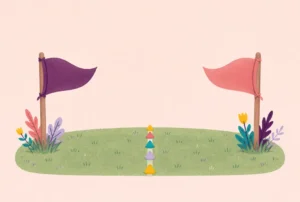
Split a field in half with a visible center line. Each team hides or places its flag in its own half where it can be seen, and marks a jail area near the back of its half.
Rules
- On your own side you’re safe. On the other team’s side, you can be tagged.
- If you’re tagged on enemy ground, you go to their jail.
- A teammate can free you by reaching the jail untagged and tagging you; you both get a free walk back.
- If you grab the enemy flag, you must carry it back across the center line without being tagged. If you’re tagged carrying it, the flag goes back where it was.
- The first team to bring the other flag home wins the round.
Safety notes
- Walk the boundaries together before you start, and keep the field away from roads, water, steep banks and poison ivy.
- Tags are a touch, not a tackle. Ban flag guarding within 10 feet of the flag so nobody gets piled on.
- Set a recall signal (three whistle blasts) and practice it once.
Leader tips
- Have each team pick a few guards and a few attackers; otherwise everyone attacks and nobody defends.
- Large or wooded fields need an adult at the center line and one roaming.
- Rounds of 15 to 20 minutes keep it moving. Swap sides at half time.
Variations
- Night version with glow sticks on each player and a lantern on each flag, only on a field your group has walked in daylight.
- Many-flag version: each team has five small flags, and the round ends after 20 minutes. Most flags wins.
Sharks and Minnows
Also called: Pom-Pom Pull-Away, Octopus
Minnows try to run from one end of the field to the other; sharks in the middle tag them, and tagged minnows become sharks.
How to run it
You need
Cones for two end lines.
Setup
Mark two end lines 50 to 80 feet apart. Choose one or two sharks to start in the middle. Everyone else lines up on one end as minnows.
Rules
- The sharks call “Fishy, fishy, cross my ocean!”
- All minnows must run to the other end line.
- Any minnow tagged becomes a shark for the next crossing.
- Keep crossing back and forth until one minnow is left. That player starts as the shark next round.
Safety notes
- Tag below the shoulders with an open hand. No pushing.
- With mixed ages, give younger players their own lane or let them be minnows twice.
Leader tips
- Short rounds and a fresh start keep slower runners from spending most of the game as sharks.
- Seaweed version: tagged minnows sit where they’re tagged and tag from the ground, which slows the game and lets everyone stay involved.
Blob Tag
Also called: Amoeba Tag, Chain Tag
Two players join hands to form the blob; everyone they tag joins the chain until the blob catches everyone.
How to run it
You need
Cones for boundaries.
Setup
Mark a square play area about 50 feet across. Pick two players to hold hands as the starting blob.
Rules
- The blob chases the other players and may tag only with the free hands at each end.
- Tagged players join the blob by holding hands.
- When the blob reaches four people, it splits into two blobs of two.
- Play until everyone is caught. The last two players free are the first blob next round.
Safety notes
- Blobs move at a jog, not a sprint; a chain whipping around a corner can pull someone off their feet.
- If the chain breaks, it must stop and rejoin before tagging again.
Leader tips
- Smaller boundaries make faster games. Shrink the space if it drags.
- Watch for blobs dragging the smallest player; split them sooner if so.
Spud
One player throws a ball high and calls a number; that player catches it and yells “Spud!” and everyone else freezes while the catcher tries to hit someone below the waist.
How to run it
You need
A soft playground ball.
Setup
Everyone gets a number. Players stand in a tight group around the thrower.
Rules
- The thrower tosses the ball straight up and calls a number.
- Everyone else scatters. The player whose number was called catches or retrieves the ball and shouts “Spud!”
- Everyone freezes. The player with the ball may take three giant steps toward anyone.
- They throw the ball gently at that player, below the waist. A hit gives the target a letter (S, then P, then U, then D). A miss gives the thrower a letter.
- Whoever got the letter throws next. Collecting all four letters means sitting out one round, then rejoining.
Safety notes
- Soft ball only, and throws below the waist. Anything at the head is a letter for the thrower.
- The frozen target may dodge by moving their upper body but must keep their feet planted.
Leader tips
- Kids who are new to the group may not know each other’s numbers yet; use first names instead.
Kick the Can
A hide-and-seek game where the seeker guards a can; caught players go to jail, and any hider who kicks the can frees them.
How to run it
You need
An empty plastic jug or can with no sharp edges.
Setup
Put the can in an open spot. Set clear boundaries and a jail area near the can. Choose one seeker.
Rules
- The seeker covers their eyes at the can and counts to 50 while everyone hides.
- The seeker searches. When they spot someone, they race back to the can, touch it, and call out the hider’s name and location. That player goes to jail.
- Any free hider who sneaks in and kicks the can frees everyone in jail. The seeker must put the can back and count to 20 before searching again.
- When everyone is in jail, the first player caught becomes the new seeker.
Safety notes
- Use a plastic jug, not a metal can with edges. Kick it along the ground, never in the air.
- Set off-limits areas clearly: no hiding in vehicles, sheds, on roofs or near water.
- Do a headcount at the end of every round.
Leader tips
- Dusk is the classic time, but stop before it’s fully dark unless your group has a night plan.
- If one player is seeker too long, add a second seeker.
Fox and Geese
A tag game played on paths stamped in snow in the shape of a wheel; everyone must stay on the paths, and the hub is safe.
How to run it
You need
Fresh snow, or chalk or rope to mark the wheel.
Setup
Tramp a big circle in fresh snow, then two or more paths crossing through the middle like spokes. The center where they cross is the safe hub. On grass or pavement, mark the wheel with rope or chalk.
Rules
- One player is the fox. Everyone else is a goose.
- Everyone must stay on the paths. Stepping off the path while being chased means you’re caught.
- Only one goose at a time may stand on the hub. If another arrives, the first must leave.
- A tagged goose becomes the fox.
Safety notes
- On icy or packed snow, make it a walking game.
- Keep the wheel away from slopes, fences and parked cars.
Leader tips
- This is an old winter game and one of the few that’s better in snow than on grass. Save it for the first good snowfall.
Prisoner's Base
Also called: Prisoner's Bars
An old running game where players dare each other out from their home base; you may only tag players who left their base before you did.
How to run it
You need
Cones or rope for bases and prisons.
Setup
Mark two home bases at opposite ends of a field, and a prison area beside each base. Split into two teams.
Rules
- Players start at their home base. To begin, one player runs out to dare the other team.
- The key rule: you may only tag an opponent who left their base before you left yours. Whoever left most recently is the hunter.
- Touching your home base again resets you, so you become “fresh” when you run out next.
- A tagged player goes to the other team’s prison. A teammate can free them by reaching the prison untagged.
- A team wins when all opponents are in prison, or when the most prisoners are held at the whistle.
Safety notes
- The left-first rule creates arguments. Use an adult or older youth as referee for the first games.
- Touch tags only.
Leader tips
- Prisoner’s Base has been played in England for centuries. Telling older kids that makes them more willing to try a game with an odd rule.
- Start with only five players per side until the dare rule clicks, then play with everyone.
Smugglers
Also called: Smugglers Over the Border
A wide game: one team tries to sneak a secret “contraband” slip across a border and into town; the other team guards the border and searches.
How to run it
You need
A few slips of paper (the contraband), rope or cones for the border and town.
Setup
Mark a long border line across a big field or along a trail, and a town base well behind it. One team guards; the other team are smugglers, starting far on the other side. The smugglers secretly give one player the contraband slip.
Rules
- Guards spread out along the border and may walk but not run until a smuggler crosses.
- Smugglers cross the border any way they like: all at once, in pairs, one by one.
- A guard who tags a smuggler may ask them to show what they’re carrying. Smugglers without the slip go free back to the start.
- If the player carrying the contraband reaches town untagged, the smugglers win. If they’re caught, the guards win.
- Swap roles each round.
Safety notes
- Use a site you’ve walked in daylight with clear limits, and post an adult where the border meets any road or water.
- Searching means showing your hands and pockets yourself; nobody touches another player’s clothing.
- Players stay in pairs if the area includes woods.
Leader tips
- Decoy slips that say “nothing” make it more fun: the guards don’t know who to chase.
- A version of this game appears in Baden-Powell’s 1908 book on scouting, with the smuggler wearing tracking irons. Ours uses a slip of paper and no tracking.
Variations
- Dispatch version: the slip is a message to deliver to a leader in town within 20 minutes.
Hare and Hounds
Also called: Paper Chase, Trail Hunt
One small group (the hares) lays a trail with markers; the rest (the hounds) follow it a few minutes later and try to catch up.
How to run it
You need
Trail markers: chalk, sticks, or biodegradable flagging tape that you remove afterward.
Setup
Pick two or three hares and give them markers and a 10-minute head start. Agree on a trail area and a finish point.
Rules
- Hares lay the trail, leaving a marker every 30 to 50 feet within sight of the last.
- Hares may lay short false trails, but must mark the dead end with an X.
- Hounds follow the trail as a group. When the trail splits, they must work out which branch is real.
- If the hounds reach the hares before the finish, the hounds win. If the hares reach the finish first, they win.
- The last group on the trail picks up every marker.
Safety notes
- Hares travel in at least a pair and stay on agreed trails, never off-trail in unfamiliar woods.
- Agree on a turnaround time. Everyone comes back to the start if it’s reached, game or no game.
- Do not use paper scraps or anything that stays in the woods.
Leader tips
- Teach a few trail signs first (straight on, turn left, turn right, not this way, end of trail). Your group’s handbook will have a set; any consistent set works.
- Using sticks and stones as markers, the old way, also leaves nothing behind once the hounds scatter them.
Campfire games and activities 8 games
Talking, listening and storytelling games for the circle around the fire, plus one night game to play well away from it. No songs here, and nothing that needs a songbook.
Story Chain
Also called: Round-Robin Story
The group builds a story one sentence at a time around the circle.
How to run it
Setup
Sit in a circle. The leader gives the opening line, for example: “The night the canoe floated away, nobody noticed at first.”
Rules
- Going around the circle, each person adds one sentence that continues the story.
- Anyone may say “pass,” and the story moves to the next person.
- The leader warns the group when three turns are left so they can wrap it up.
- The last person gives the ending.
Safety notes
- Set a limit before you start if your group includes young kids: spooky is fine, gory isn’t.
Leader tips
- Give a setting and a problem in your opening line; it gets better stories than “Once upon a time.”
- Pass a stick or flashlight to show whose turn it is, so people don’t talk over each other.
Variations
- Three words each instead of a sentence, for a faster, sillier story.
- Fortune version: see Fortunately, Unfortunately.
Fortunately, Unfortunately
A story chain where sentences must alternate between good news and bad news.
How to run it
Setup
Sit in a circle. The leader starts: “Fortunately, the hike was only two miles.”
Rules
- The next person must start with “Unfortunately…” and add bad news: “Unfortunately, it was two miles straight up.”
- The next starts with “Fortunately…” and finds the good side.
- Keep alternating around the circle until the leader calls the last line.
Safety notes
- Keep bad news away from real people in the group.
Leader tips
- It teaches kids to spot the good side of a bad day, which is handy on a rainy campout. You don’t have to say that out loud.
I'm Going Camping
Also called: I Packed My Bag, Grandmother's Trunk
A memory game: each player repeats the whole packing list so far and adds one item.
How to run it
Setup
Sit in a circle.
Rules
- The first player says “I’m going camping and I’m bringing a flashlight.”
- The next player repeats the list and adds one: “I’m going camping and I’m bringing a flashlight and a tent.”
- Keep going around. If someone forgets, the circle helps them, and they still add their item.
- See how long the list gets before the group can’t hold it.
Safety notes
- No safety concerns for this one.
Leader tips
- Alphabet version: items must go in A to Z order (axe, bandana, compass…). That makes it easier to remember, not harder.
- Go first as the leader with something useful, then later players start packing things like a piano.
Night Sounds
Also called: Sound Map
Everyone sits silently for a few minutes and counts every separate sound they hear, then compares lists.
How to run it
You need
Paper and pencil, optional.
Setup
Sit in the circle or a short walk from the fire. Ask everyone to close their eyes or look at the ground.
Rules
- The leader sets a timer for three minutes. Nobody talks.
- Each player counts the different sounds they hear: wind, an owl, a car far away, someone’s stomach.
- When time’s up, go around and share counts. The player with the most names their sounds and others say whether they heard them too.
- Talk about which sounds were natural and which were people-made.
Safety notes
- Stay in the circle or a spot everyone can see. Headcount after any game away from the fire.
Leader tips
- Sound map version: draw yourself as an X in the middle of a page and mark each sound where it came from.
- This settles a loud group better than asking them to be quiet.
Star Hunt
Also called: Constellation Hunt
Teams race to find a list of bright stars and star patterns in the night sky.
How to run it
You need
A red-light flashlight, a printed or app star chart.
Setup
Pick a spot away from the fire and lights, with a wide view. Give each team a list that fits the season, for example the Big Dipper, the North Star, and one bright planet.
Rules
- Give eyes 10 minutes to adjust to the dark. Use red light only.
- Teams find each item on the list and point it out to the leader.
- The leader confirms with the chart. First team to find everything wins, but everyone keeps going until each team has found all of them.
- End with a story: many cultures named the same stars differently.
Safety notes
- Stay in a cleared, flat area. No walking around looking up.
- Agree on how to get back to the campsite before anyone’s eyes adjust.
Leader tips
- Teach the pointer stars first: the two end stars of the Big Dipper’s bowl point to the North Star. Everyone can do that on their first night.
- Don’t hold up the game for clouds; switch to Night Sounds.
Skit Bag
Also called: Prop Bag Skits
Each patrol gets a bag of random props and 10 minutes to create a two-minute skit that uses every item.
How to run it
You need
One bag per team with 4 or 5 random items.
Setup
Fill a bag per team with unrelated items: a spoon, a hat, a rope, a water bottle, a sock.
Rules
- Teams open their bags and have 10 minutes to plan a skit using every item.
- Each team performs for no more than two minutes.
- The audience applauds every skit. Skip scoring, or give awards for things like “best use of a sock.”
Safety notes
- Ground rules before planning: no skits that make fun of a real person, group, culture or disability, and no humor about bathroom accidents or injuries.
- Keep the stage area away from the fire ring.
Leader tips
- The leader should approve each skit idea in one sentence before teams rehearse. It catches problems early.
- Teams that freeze can do a news report: one anchor, a weather person, a sports reporter, all using the props.
Cheers and Applause
Also called: Campfire Cheers
Short, silly applause routines the group does together to thank a skit or celebrate a team.
How to run it
Setup
Teach two or three to the whole group, then let teams invent their own.
Rules
- Teach a cheer with a demonstration. Examples: the Round of Applause (clap while moving your hands in a big circle); the Seal (arms straight, slap hands together and bark); the Firecracker (pretend to light a fuse, hiss, then clap once loudly and throw arms up).
- Use them after every skit or announcement through the evening.
- Give each patrol two minutes to invent a cheer, then teach it to everyone.
Safety notes
- None, apart from the usual: stay seated or standing in place around the fire.
Leader tips
- Cheers give quieter kids a way to join in without being on stage.
- Keep a list of the ones your group invents; they become your group’s own traditions.
Flashlight Tag
Hide-and-seek in the dark: the seeker tags hiders by catching them in the flashlight beam and calling their name.
How to run it
You need
One flashlight for the seeker, glow sticks for each player, optional.
Setup
Pick an open area well away from the fire and the tents, that the group has walked in daylight. Mark a home base with a lantern.
Rules
- The seeker stands at base and counts to 30 while others hide inside the boundaries.
- The seeker walks around with the flashlight. To tag someone, shine the beam on them and call their name.
- Tagged players come back to base and become extra seekers (without lights) who help spot.
- Hiders who reach base without being tagged are safe for that round.
Safety notes
- Walking only. Running in the dark is how ankles get sprained.
- No hiding near the fire ring, tents, water, cliffs or roads. Adults stand at the edges of the play area.
- Every player wears a glow stick, so leaders can count them at a glance.
Leader tips
- Short rounds with a headcount at base after each.
- If the group’s never played in the dark, play it once at dusk first.
Patrol and team challenges 8 games
Timed challenges for patrols or small teams of four to eight. Each one uses a real outdoor skill as the task, so the competition doubles as practice.
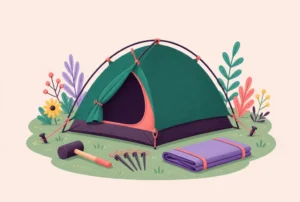
Blindfold Tent Pitch
Each patrol pitches a tent while everyone except one guide is blindfolded; the guide can talk but not touch.
How to run it
You need
One tent per patrol, blindfolds for all but one per patrol.
Setup
Each patrol starts with a packed tent in its bag. Every member except the guide wears a blindfold.
Rules
- On “go,” the blindfolded members unpack and pitch the tent, following the guide’s spoken instructions.
- The guide may not touch the tent, poles or stakes.
- When the patrol thinks it’s done, the leader inspects: taut, stakes in, door zipped.
- Swap guides and pitch again, or compare times between patrols.
Safety notes
- Hand out stakes only when the tent is laid out, and use a rubber mallet, not a hatchet.
- Blindfolded players stay on their knees when staking.
- Pick flat, clear ground with no sticks or rocks.
Leader tips
- The real lesson is in how guides give directions. Ask afterward what instructions worked.
- Run it after the patrol has pitched the tent normally at least once.
String Burn Challenge
Also called: Fire-Building Race
Teams build a fire from scratch that’s big enough to burn through a string stretched above it.
How to run it
You need
A fire ring or fire pan per team, two sticks and cotton string per team, tinder, kindling, fuel wood, a bucket of water per fire.
Setup
At each fire site, tie a cotton string between two sticks pushed into the ground, about 18 inches above the base of the fire. Give each team the same amount of wood and matches.
Rules
- Teams gather or are given tinder and kindling and lay their fire.
- On “go,” they light the fire with the matches allowed (three is common).
- Teams feed the fire until the flame burns through the string.
- The first string to break wins. Every fire is put out cold afterward: drown, stir, drown, feel for heat.
Safety notes
- Only in a site where fires are allowed and fire danger is low. Check local burn bans.
- An adult at every fire, a full water bucket at every fire, long hair tied back and sleeves pushed up.
- Follow your group’s own fire-safety rules and training. This game is practice for trained youth, not a first lesson.
Leader tips
- Teams that build a good tinder bundle win. Teams that pile on big wood early lose.
- Smokey Bear’s campfire guidance is a good refresher before you start: smokeybear.com.
Tarp Shelter Race
Teams build a rain shelter big enough for everyone to sit under, then the leader tests it with a bucket of water.
How to run it
You need
One tarp, a length of rope and stakes per team.
Setup
Give each team a tarp, rope and stakes, and pick a site with trees or poles.
Rules
- Teams have 15 minutes to pitch a shelter all of them can sit under.
- Every rope must be tied with a knot your group has learned. Leaders check knots.
- When time’s up, the team sits under the shelter while the leader pours a cup of water on top.
- Score: dry team, sturdy shelter, good knots.
Safety notes
- Keep ropes below head height or flag them; ropes at neck height are a hazard in the dark.
- Don’t tie to dead trees or branches.
Leader tips
- Let teams look at a picture of an A-frame and a lean-to before they start, then let them choose.
Pack Your Pack Relay
Teams race to pack a day pack from a pile of gear, leaving out the items that don’t belong and packing heavy items in the right place.
How to run it
You need
A pile of gear per team: real items and a few things that don't belong.
Setup
Make identical piles at the far end of the room: rain jacket, water bottle, first aid kit, snack, map, flashlight, sunscreen, plus decoys (a pillow, a video game controller, a frying pan).
Rules
- Teams line up. One runner at a time goes to the pile, packs one item, and runs back to tag the next.
- Any runner may also take a decoy out of the pack instead of adding an item.
- When the team thinks the pack is done, they bring it to the leader.
- The leader checks: nothing missing, no decoys, heavy items close to the back.
Safety notes
- Use fake or empty items instead of anything sharp or heavy.
Leader tips
- Base the list on whatever gear list your group uses for its hikes.
- Debrief with one question: what’s the one thing you’d never leave behind?
Tripod Lashing Challenge
Teams lash three poles into a tripod that holds a full bucket of water off the ground.
How to run it
You need
Three staves or poles per team, lashing rope, a bucket of water.
Setup
Each team gets three poles of the same length and rope.
Rules
- Teams lash the three poles together near one end with a tripod lashing, then spread the legs.
- They hang the bucket from the top using rope.
- The leader times how long it holds, up to two minutes.
- Fastest stable tripod wins.
Safety notes
- Nobody stands or climbs on the tripod, and nobody stands under the bucket.
- Use poles you can lift easily; this is not a pioneering tower.
- Teach the lashing first. The game is practice, not instruction.
Leader tips
- Teams that get frapping turns tight win. Show a loose one and a tight one first.
- For younger groups, use a smaller load: a water bottle in a bag.
String Cup Stack
Teams build a cup pyramid using only a rubber band controlled by strings; no hands may touch the cups.
How to run it
You need
One rubber band with 4 to 8 strings tied on per team, 10 paper cups per team.
Setup
Tie strings about three feet long to a rubber band, one per player. Scatter 10 upside-down cups in front of each team.
Rules
- Each player holds one string. By pulling outward together, the team stretches the band wide enough to fit over a cup.
- Letting the strings slacken tightens the band so the team can lift the cup and place it.
- Build a pyramid: four, three, two, one.
- If a cup falls, it stays where it lands until the team picks it up with the band again.
Safety notes
- Don’t stretch the band toward faces. Snapped bands sting.
Leader tips
- Teams that pick one caller do better than teams where everyone talks. Point that out after.
Marshmallow Catapult
Teams build a catapult from craft sticks, rubber bands and a spoon, then compete for distance and accuracy.
How to run it
You need
10 craft sticks, 6 rubber bands, a plastic spoon and 5 marshmallows per team, a target.
Setup
Give each team the same materials. Set a target (a bucket or a hula hoop) 10 feet away.
Rules
- Teams have 20 minutes to build.
- Each team gets five shots. Score 1 point for landing within a step of the target, 3 for in the target.
- Then a distance round: the longest launch wins.
Safety notes
- Launch toward the target only, and never at people. Anyone in front of the launch line stops the round.
- Check for food allergies before using marshmallows, or use pom-poms.
Leader tips
- Share a picture of a simple lever catapult only if a team is completely stuck after 10 minutes.
Camp Scavenger Hunt
Teams work through a list of things to find, photograph or do around camp, with no picking of live plants.
How to run it
You need
A printed list per team, a bag per team, a phone or camera for photo items, optional.
Setup
Write a list of 15 to 25 items that fit your site: a pine cone, a feather, something smooth, a track in the mud (photo), a leaf with jagged edges (photo), the north side of a tree. Set boundaries and a return time.
Rules
- Teams get the list and the return time.
- Teams collect natural objects already on the ground, take photos of living things, and complete action items (all members balance on one log).
- Back at base, teams present their finds. One point per item, plus bonus points for the best find.
- Return natural items where they were found.
Safety notes
- Teams of at least three, with an adult or older youth for younger groups.
- Nothing from living plants; photos only. Teach any poison ivy or oak in the area before you start.
- Return time is firm. Late teams lose points, so nobody hurries back through the woods.
Leader tips
- Mix easy and hard items so every team scores.
- For more clue ideas you can adapt, see our scavenger hunt clues for kids.
Rainy-day games 6 games
For the afternoon the campout moves into the dining hall, or the hike gets canceled and 20 kids are in a church basement. Paper, balloons and a table are enough.

Balloon Volleyball
Volleyball with a balloon over a rope or a line of chairs; anyone can play, sitting or standing.
How to run it
You need
Balloons, a rope or a row of chairs as the net.
Setup
String a rope at shoulder height across the room or line up chairs as the net. Split into two teams.
Rules
- Serve the balloon over the net with a tap.
- Each team may hit it as many times as it likes, but no player twice in a row.
- A point goes to the other team when the balloon touches the floor on your side.
- Play to 11.
Safety notes
- Check for latex allergies. Latex-free balloons exist and cost about the same.
- Clear the floor and push tables to the walls.
Leader tips
- Play the whole game seated on the floor so everyone is on the same level, including kids with mobility differences.
- Two balloons at once makes it chaos in a good way.
Paper Airplane Contest
Everyone folds a plane, then competes in distance, time in the air, and accuracy rounds.
How to run it
You need
Printer paper, tape measure, masking tape for a launch line.
Setup
Mark a launch line on the floor. Give everyone two sheets of paper.
Rules
- Ten minutes to fold. Leaders can show one basic dart design for anyone stuck.
- Distance round: three throws each, best one counts.
- Hang time round: count seconds from release to landing.
- Accuracy round: land in a box or on a taped target.
Safety notes
- Throw only from the line, and only when the landing zone is clear.
Leader tips
- Awards for each round mean three different winners, not one.
- Ask what changes made planes go farther. It’s an easy way into a talk about how wings work.
Paper Snowball Fight
Two teams throw crumpled paper balls into each other’s half; when the whistle blows, the side with fewer balls wins.
How to run it
You need
Scrap paper, crumpled into balls, a rope or tape center line.
Setup
Split the room with a center line. Give each team a pile of paper balls.
Rules
- On the whistle, everyone throws balls into the other team’s half.
- Pick up any ball on your side and throw it back. Nobody crosses the line.
- After 60 seconds, the whistle blows and everyone freezes.
- Count balls on each side. Fewer balls wins.
Safety notes
- Paper only; no tape inside the balls, no wet paper.
- Underhand throws for younger groups.
Leader tips
- Have everyone write one fact they learned at the meeting on their paper before crumpling. At the end, each person opens a ball and reads it.
Sketch Relay
Also called: Relay Drawing
Teams race to guess drawings: one runner at a time gets a word from the leader and draws it for the team.
How to run it
You need
A whiteboard, chalkboard or big paper per team, markers, a list of words.
Setup
Teams sit across the room from the leader. Each team has a board.
Rules
- The first runner from each team comes to the leader and gets the same secret word.
- They run back and draw it. No letters, numbers or talking.
- When the team guesses right, the next runner goes to the leader for the next word.
- The first team through the list wins.
Safety notes
- Walk, don’t run, if the floor is crowded with chairs.
Leader tips
- Use words from your group’s world: tent, canoe, compass, marshmallow, raccoon.
- Easy and hard words alternate so no team gets stuck forever.
Hot Potato
Players pass an object around the circle while music plays or a timer runs; whoever holds it at the stop gets a funny task.
How to run it
You need
A beanbag or soft ball, music or a timer.
Setup
Sit in a circle.
Rules
- Start the music or a hidden timer. Players pass the beanbag around the circle as fast as they can.
- When it stops, whoever is holding the beanbag does a small task: name an animal for every letter of their name, or make a sound effect.
- Nobody is out. Start the next round.
Safety notes
- Pass, don’t throw.
Leader tips
- Reverse direction at random to wake people up.
- Questions in a bowl work as tasks too: “What’s your favorite thing we did this year?”
Paper Football
Also called: Table Football, Flick Football
Two players flick a folded paper triangle across a table and score when it hangs over the opposite edge.
How to run it
You need
Paper folded into a small triangle, a table.
Setup
Fold a strip of paper into a tight triangle. Two players sit at opposite ends of a table.
Rules
- Players take turns flicking the triangle across the table.
- A touchdown is when part of the triangle hangs over the far edge without falling. Touchdowns are worth 6.
- After a touchdown, the scorer tries a field goal: the opponent makes goalposts with their fingers, and the scorer flicks the triangle through from the edge of the table for 1 point.
- If the triangle falls off the table, the other player takes the next turn from their end.
Safety notes
- Flick goalposts are a target. Aim low and don’t flick at anyone’s face.
Leader tips
- Run a bracket tournament on a whiteboard; it keeps 20 kids busy for an hour.
Kim's game and skill-building games 11 games
Observation, knots, first aid and compass work turned into games. They reinforce skills your group is already learning; they don’t replace the instruction itself.
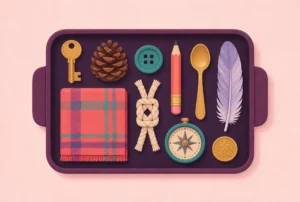
Kim's Game
Also called: Memory Tray, Observation Tray
Players study a tray of objects for one minute, then list as many as they can remember.
How to run it
You need
A tray, 20 to 30 small objects, a cloth to cover them, paper and pencils.
Setup
Lay 20 to 30 small, different objects on a tray and cover them: a button, a key, a pine cone, a coin, a pencil stub, a spoon, a bead. Make an answer list.
Rules
- Gather players around the tray and uncover it for one minute.
- Cover it again. Players write down every object they remember. Younger kids can whisper their lists to a leader.
- Uncover the tray and check. One point per correct item.
- Play again with new objects. Most players improve on the second round.
Safety notes
- Leave out anything sharp, any medicine, and small items if very young children are present.
Leader tips
- The game takes its name from Rudyard Kipling’s 1901 novel Kim, where a boy is trained to notice and remember. Baden-Powell’s 1908 book on scouting describes it as a memory game for patrols.
- Teach a trick between rounds: group objects in your head by type (metal things, natural things) or make up a story that links them.
- Use it for review: put real first aid kit items on the tray and ask what each is for.
Variations
- What’s Gone: show the tray, cover it, take one object away, and uncover. Who can name what’s missing?
- Outdoor version: lay objects along a short trail, and players list what they passed.
Feely Bag
Also called: Touch Kim's Game
A Kim’s Game for the hands: players reach into a bag without looking and identify objects by touch.
How to run it
You need
A cloth bag or pillowcase, 10 to 15 objects, paper and pencils.
Setup
Put 10 to 15 objects with different textures in a bag: a pine cone, a shell, a key, a cotton ball, a walnut, a smooth stone, a feather.
Rules
- Pass the bag around the circle. Each player feels inside for 30 seconds without looking.
- Players write down or whisper what they felt.
- Empty the bag and check. One point per correct object.
Safety notes
- No sharp, sticky or breakable items. Nothing alive.
Leader tips
- Ask players to describe the object without naming it: rough, cold, ridged. It’s a good warm-up for describing an injury or a plant to someone else.
Sound Kim's Game
Also called: What's That Sound?
A leader behind a screen makes a series of sounds; players identify each one.
How to run it
You need
10 objects that make sounds, a screen or a tarp to hide behind, paper and pencils.
Setup
Hide behind a screen with your objects: paper tearing, a zipper, keys jingling, water poured into a cup, a stick snapping, a match box shaken.
Rules
- Number each sound out loud, then make it for three seconds.
- Players write what they think it was.
- Reveal each object at the end. One point per correct answer.
Safety notes
- Keep matches in their box; don’t strike them for this game.
Leader tips
- Finish with outdoor sounds recorded at camp, if you have them.
- Pair it with Night Sounds at the campfire later the same day.
Knot Relay
Teams race to tie a list of knots correctly, one runner per knot, with a leader checking each one.
How to run it
You need
One rope per team, about 6 feet, a list of knots your group has learned.
Setup
Teams line up at one end. A leader with the ropes stands at the other end, one rope per team.
Rules
- The leader calls the first knot, for example a square knot.
- The first runner from each team runs to the rope and ties it.
- The leader checks it. If it’s right, the runner unties it and runs back to tag the next player. If not, they try again.
- The leader calls a new knot for each runner. The first team through the list wins.
Safety notes
- Ropes stay on the ground or in hands; no swinging them.
- Never tie a rope around anyone’s neck or body for this game.
Leader tips
- Use only knots the group has already been taught. Speed comes after accuracy.
- Call out the use, not the name, for older groups: “a loop that won’t slip” instead of “a bowline.”
Variations
- Blindfold round for older groups who already know the knots well.
Knot Chain
Also called: Rope Chain Challenge
Teams join short ropes into the longest working chain they can in three minutes, using the right knots for joining ropes.
How to run it
You need
Several short ropes per team.
Setup
Give each team the same number of short ropes.
Rules
- On “go,” teams join their ropes end to end with knots meant for joining two ropes.
- After three minutes, stop. Leaders test each chain with a firm pull.
- The longest chain that holds wins. Knots that slip don’t count, and the chain is measured to the first failed knot.
Safety notes
- Test pulls are done by leaders, not tug-of-war.
Leader tips
- A good moment to show why a square knot isn’t for joining ropes of different thickness, and what to use instead.
First Aid Scenario Relay
Teams rotate through stations where they must respond to a written first aid scenario; leaders score each response.
How to run it
You need
Scenario cards, a first aid kit per team, a stopwatch.
Setup
Set up three to five stations. At each, place a scenario card (“A hiker has a blister on their heel,” “Someone has a nosebleed”) and supplies. Put a trained adult at each station.
Rules
- Teams start at different stations. The first job at every station is to say how they’d check the scene is safe.
- The team reads the card and shows what they’d do, using a teammate as the patient.
- The station leader scores: scene safety, calling for help when needed, correct care, and comforting the patient.
- Teams rotate on a signal every five minutes.
Safety notes
- Scenarios must match what your group has been trained to do. Station leaders should be trained in first aid, and should correct mistakes on the spot.
- Ask before touching. Patients may say no, and a backpack can stand in as the patient.
- Never practice rescue breathing or chest compressions on a real person; use a manikin.
Leader tips
- Base scenarios on what actually happens at your camps: blisters, splinters, scrapes, insect stings, minor burns, dehydration.
- The American Red Cross offers first aid courses for adults leading youth activities.
Improvised Stretcher Relay
Teams build a stretcher from poles and jackets, then carry a weighted pack (not a person) around a short course.
How to run it
You need
Two poles and two jackets or a blanket per team, a backpack weighted to about 20 pounds per team, cones for a course.
Setup
Lay out a short course with cones. Give each team two poles, jackets or a blanket, and a weighted pack as the patient.
Rules
- Teams build a stretcher: slide the poles through the sleeves of buttoned or zipped jackets, or fold a blanket around the poles.
- Load the pack. Four carriers lift together on a count.
- Carry it around the course. Anything that falls off means you go back to the start and reload.
- Fastest clean run wins.
Safety notes
- Use a weighted pack, never a person, for the race.
- Lift with legs, on a count. Carriers swap if anyone tires.
Leader tips
- Talk about why real rescues move slowly: the race is the fun part, but in real life, steady wins.
Compass Triangle
Also called: Bearing Walk
Pairs follow three compass bearings and distances that, done right, bring them back to the coin they started at.
How to run it
You need
A baseplate compass per pair, a coin or washer per pair, a card with three bearings and distances.
Setup
Each pair drops a coin in the grass as their start point and gets a card, for example: 60 degrees for 30 paces, 180 degrees for 30 paces, 300 degrees for 30 paces.
Rules
- Pairs set the first bearing on the compass, face it, and walk the paces.
- At the end of each leg, they set the next bearing and walk again.
- After the third leg, they should be standing on or near their coin.
- Measure how far off each pair is. Closest wins.
Safety notes
- Use an open field with no hazards along any leg.
- Hold compasses away from phones, belt buckles and car hoods; metal throws the needle off.
Leader tips
- Three bearings 120 degrees apart and equal distances make an equilateral triangle. Older kids enjoy working out new courses on paper.
- Teach how to take and follow a bearing first. The game is practice.
Compass Point Call
Also called: Points of the Compass
The leader calls a direction and everyone turns to face it; it builds direction sense fast.
How to run it
You need
Four signs for N, E, S, W.
Setup
Find north with a compass and post the four signs on the walls. Players stand spread out.
Rules
- Call a direction: “North!” Everyone turns to face it.
- Add the in-between points as the group improves: northeast, southwest.
- Remove the signs after a few rounds.
- Last to turn the right way does a silly task, then rejoins.
Safety notes
- Space players out so nobody spins into a neighbor.
Leader tips
- Move to degrees with older groups: “Face 90!”
Pace and Estimate
Also called: Pacing Contest
Players measure their own pace on a known distance, then estimate distances to landmarks and check them.
How to run it
You need
A 100-foot tape measure or a measured course, cones, paper and pencils.
Setup
Measure and mark a straight 100-foot course.
Rules
- Each player walks the course at a normal step, counting every second step (one pace = two steps). They repeat it and average.
- They divide 100 by their count to get feet per pace.
- Players pace to three landmarks you choose and write their estimates.
- Measure the real distances. Closest total wins.
Safety notes
- Choose landmarks in open ground, not across roads or parking lots.
Leader tips
- Have players guess each distance by eye before they pace it. The gap between guess and pace is what sticks.
Trail Signs Tracking
Also called: Follow the Signs
Teams lay and read short trails built from simple trail signs made of sticks and stones.
How to run it
You need
Sticks, stones and grass found on site, a card showing the trail signs your group uses.
Setup
Teach five signs: straight on, turn right, turn left, not this way, and end of trail with a message hidden nearby. Use whatever set your group’s handbook shows; consistency matters more than the design.
Rules
- Each team lays a trail of eight to ten signs within a set area and hides a note at the end.
- Teams swap and follow each other’s trails.
- When they find the note, they bring it to the leader.
- Teams then return along the trail and scatter the signs, leaving no trace.
Safety notes
- Trails stay on paths and inside boundaries.
- Teams of three or more.
Leader tips
- Build signs only from loose material already on the ground, and scatter them afterward.
- Hare and Hounds uses the same signs at a run, so play this first.
Quiet games 7 games
Low-volume games for the end of a meeting, the wait before pickup, a cabin after lights-out warnings, or a group that needs to settle down.
Silent Ball
Also called: Silent Speedball
Players toss a soft ball to each other in complete silence; anyone who talks, drops a good throw or makes a bad throw sits down.
How to run it
You need
A soft foam ball or beanbag.
Setup
Players sit or stand spread around the room, or sit on desks and chairs.
Rules
- Toss the ball to anyone. Nobody may make a sound.
- If you drop a catchable throw, talk or laugh out loud, you sit down. A bad throw means the thrower sits.
- The leader is the judge, and their decision is final (and silent: just point).
- Last two standing win. Everyone back in for the next round.
Safety notes
- Soft ball only. Underhand tosses.
Leader tips
- It’s a great reset after a loud game: two rounds and the room is calm.
- Players who sit down stay silent too, which keeps the room quiet even late in the round.
Heads Up, Seven Up
Also called: Thumbs Up, Seven Up
Seven players secretly press down the thumbs of seated players, who then try to guess who picked them.
How to run it
You need
Tables or desks.
Setup
Choose seven players to come to the front. Everyone else sits with heads down on the table, eyes closed, one thumb up.
Rules
- Each of the seven quietly presses down one person’s thumb, then returns to the front.
- The leader says “Heads up, seven up!”
- Players whose thumbs were pressed stand and each guess who picked them.
- If they guess right, they swap places with that person.
Safety notes
- A light press on the thumb only.
Leader tips
- Use fewer pickers with a small group: Heads Up, Four Up works fine with 12 people.
- Peeking ruins it. If it happens a lot, swap to Silent Ball.
Sleeping Lions
Everyone lies perfectly still as a sleeping lion; the hunter tries to make them move or laugh without touching them.
How to run it
Setup
Players lie on the floor in a comfortable position. Choose one or two hunters.
Rules
- Lions must stay completely still, eyes closed.
- Hunters walk among them and try to make them laugh or move with jokes and funny faces, but may not touch.
- Lions who move or giggle become hunters.
- The last lion still asleep wins.
Safety notes
- Hunters may not touch anyone at all.
Leader tips
- Run it at the end of a meeting while waiting for parents. Kids love it and the room gets quiet.
Keeper of the Keys
Also called: Sleeping Pirate, Guard the Treasure
A blindfolded keeper sits in the middle of the circle guarding a ring of keys; players try to sneak in and steal them silently.
How to run it
You need
A ring of keys, a blindfold.
Setup
The keeper sits blindfolded in the center with the keys on the floor in front of them. Everyone else sits in a circle.
Rules
- The leader silently points to one player, who tries to creep in and take the keys back to their place without a sound.
- If the keeper hears them, the keeper points at the sound. If they point at the thief, the thief goes back.
- A thief who gets the keys back to their spot becomes the next keeper.
Safety notes
- The keeper points; they never lunge or swing an arm.
- If anyone doesn’t want to be blindfolded, they can close their eyes or face away from the circle.
Leader tips
- It’s a calm, focused game for the campfire circle or the last minutes of a meeting.
- Older kids like a rule that the keeper gets three points per round, so guessing randomly costs them.
Who's Missing?
One player leaves the room; another hides under a blanket; the first player comes back and guesses who’s missing.
How to run it
You need
A blanket.
Setup
Players sit in a circle.
Rules
- One player leaves the room or turns away with their eyes closed.
- The leader points to someone who hides under a blanket. Everyone else swaps seats.
- The guesser comes back and has three guesses to name who’s under the blanket.
- The hider becomes the next guesser.
Safety notes
- The hider decides if they’re comfortable under a blanket; a jacket over the head works too.
Leader tips
- Great for the first meetings of a new den; it’s a name game in disguise.
Signal Drill
Also called: Silent Signals
The leader gives silent hand signals and the group responds; it practices the signals your group uses for real.
How to run it
Setup
Teach three or four signals your group will use all year: quiet (a raised hand), gather around me, form a line, form a circle.
Rules
- Give signals one at a time without speaking.
- Groups respond as fast as they can, still silently.
- Mix them up and speed up. If the group does all five right in a row, they’ve earned a game of their choice.
Safety notes
- None.
Leader tips
- Most youth groups already have a quiet signal. Use yours, so the practice carries over to real meetings.
- The best groups respond to the signal in under five seconds. Time it, and let them beat their record.
What Changed?
Also called: Spot the Difference
Partners look at each other for 30 seconds, turn around and change three things about their appearance, then try to spot the changes.
How to run it
Setup
Players pair up, standing face to face.
Rules
- Partners study each other for 30 seconds.
- They turn back to back and each changes three things: untie a shoe, roll a sleeve, move a watch.
- Turn around. Each tries to spot all three changes.
- Swap partners and go again with four changes.
Safety notes
- Changes are to clothing and accessories only, nothing that involves undressing.
Leader tips
- A quick observation drill that pairs well with Kim’s Game.
Plan a meeting: sample agendas
Most youth group meetings follow the same shape: something to do as people arrive, an opening, the main activity, a game, and a closing. The four agendas below fill that shape with games from this page. Swap in your own opening and closing, and your program’s activity for the month. Add an agenda to your print list and the PDF starts with a one-page run sheet.
Rules of thumb
- Put the game right after the skill. Teach a knot, then run the Knot Relay. Practice under a bit of pressure is what makes a skill stick.
- Alternate loud and calm. A high-energy game followed by a quiet one keeps a room from boiling over.
- End calm. Parents arriving to a room of sprinting kids is nobody’s favorite pickup.
- Bring a backup. Have one no-prop game ready (Captain’s Coming, Silent Ball) for when the main activity runs short or the weather turns.
- Let youth lead. Older youth can run most of these games after watching them once. That’s leadership practice too.
Den meeting, ages 7-10, 60 minutes
8 to 12 kids, a meeting room · 60 minutes
- Snake in the GrassGathering game as kids arrive10 min
- Opening: your group's usual opening5 min
- Main activity or skill for the month20 min
- Crows and CranesActive game10 min
- Sleeping LionsCalm-down game5 min
- Closing: recap, announcements, cleanup10 min
Burn off energy while people arrive, then the main activity while attention is high. An active game rewards a good session, and a calm game sets up the closing.
Troop meeting, ages 11-17, 90 minutes
Several patrols, a hall and a yard · 90 minutes
- Steal the BaconPre-opening game10 min
- Opening5 min
- Skill instruction by older youth20 min
- Knot RelaySkill game to practice it15 min
- Patrol meetings15 min
- String Cup StackInter-patrol challenge15 min
- Closing and leader's minute10 min
A common pattern for youth-led meetings: teach a skill, then use a game to practice it. The game right after instruction is what makes the skill stick.
Rainy campout afternoon, 2 hours
A group stuck in a dining hall or pavilion · 120 minutes
- Balloon VolleyballWarm-up15 min
- Kim's GameObservation game15 min
- Marshmallow CatapultBuild challenge40 min
- Snack and water break10 min
- Sketch RelayRace20 min
- Silent BallWind-down10 min
- Skit BagPlan the campfire skits10 min
Mix active and seated games so the room never gets too loud, and finish by planning something for later. Kids stop watching the rain when they have a skit to rehearse.
Campfire evening, 75 minutes
Any group around a fire ring · 75 minutes
- Night SoundsGather and settle5 min
- Story ChainStory starter15 min
- Skit BagSkits with cheers between them30 min
- I'm Going CampingMemory game10 min
- Star HuntStargazing walk away from the fire15 min
Start quiet, build up to the skits, then wind down. The last activity should leave everyone ready for bed, not wound up.
Safety, supervision and inclusive play
Every game on this page has its own safety notes. These are the general rules underneath them. Your organization’s own safety and youth protection policies come first; where they’re stricter than anything here, follow them.
Supervision
- Follow your organization’s youth protection rules on adult supervision. Many youth organizations require at least two screened adults at every activity and forbid one-on-one contact between an adult and a youth.
- Count heads before a game, after it, and every time the group moves. For field and night games, give each player a buddy and do buddy checks.
- Walk the boundaries with the group before any outdoor game. Point out what’s out of bounds: water, roads, parking lots, steep ground, poison ivy.
- Agree on a recall signal (three whistle blasts works) and practice it once before you need it.
- Know where the first aid kit is and who’s trained to use it. Keep medical forms and emergency contacts with you, not in a car across the field.
Heat and hydration
- Run high-energy games in the morning or evening in hot weather, and move the rest into the shade.
- Schedule water breaks every 15 to 20 minutes on hot days, before anyone says they’re thirsty. Everyone carries a full water bottle.
- Learn the signs of heat exhaustion (heavy sweating, cold clammy skin, nausea, dizziness, headache) and stop the game for anyone who shows them: rest in shade, loosen clothing, sip water.
- Confusion, hot skin, or passing out can mean heat stroke, which is a medical emergency. Call 911 and cool the person right away. The National Weather Service’s heat illness guide has a one-page chart of both.
- Check the forecast and the heat index before a summer outing, and have an indoor plan ready.
Weather and lightning
- When thunder roars, go indoors. If you can hear thunder, you’re close enough to be struck. Stop outdoor games and move into a building or a hard-topped vehicle, and wait 30 minutes after the last thunder before going back out. See the National Weather Service’s lightning safety page.
- In cold weather, keep players moving, keep gear dry, and end games before anyone gets wet and chilled.
Night games and fire
- Only play night games on ground the group has walked in daylight. Walking only, and a glow stick on every player.
- Keep every game away from the fire ring except the seated campfire games. Follow local fire rules and put fires dead out: drown, stir, and feel for heat.
Inclusive play
- No long eliminations. Games here put players back in quickly, or turn them into helpers. If a game leaves someone sitting out for long, change the rule.
- Pick teams fairly. Count off, draw cards or use existing patrols. Never have captains pick teams one by one.
- Offer a role to anyone sitting out. Timekeeper, referee, scorekeeper or judge are real jobs. Anyone may skip any game, no reason needed.
- Mobility: many games work seated (Balloon Volleyball, Kim’s Game, Keeper of the Keys). Plan the seated version in from the start.
- Sensory needs: warn before loud games and whistles, give a quiet spot to step away to, and let players opt out of blindfolds.
- Hearing, vision and language: demonstrate before you explain, face the group when you talk, and pair verbal calls with hand signals.
- Allergies: check before using food, latex balloons or outdoor sites with stinging insects.
- Touch: tags are a one-hand touch on the back or shoulder. Anyone who doesn’t want to hold hands or be touched can take a no-touch role.
What we left out on purpose
- Games that hurt or humiliate: no dodgeball at close range, no British Bulldog-style tackling, no initiation-style pranks or games that single someone out.
- Water games that need lifeguards or swim checks. Follow your organization’s aquatics rules for anything in or near water.
- Official requirements. We don’t reproduce any organization’s program requirements. Use the official sources below.
Printable game cards
Every game prints as a half-page card with setup, numbered rules, safety notes and leader tips, two cards to a sheet. Print the games on your list, the games your filters show, or the whole library. Slip them in a binder or a zip bag for the campout box. Cards are built in your browser, and nothing is uploaded.
Ready-made PDFs of all 57 cards: US Letter · A4. Print at 100% (“Actual size”). More help: printing tips.
For leaders and librarians
No ads, no sign-up, no email wall. Free to print and copy for your group.
You’re welcome to link to this page from a troop or den website, a leader resource list, a training handout or a library guide. To cite it:
Party Game Book Editors. (2026). Troop and den games: A library of games for scout meetings, campouts and youth groups. Party Game Book. https://partygamebook.com/troop-games/
Party Game Book Editors. “Troop and Den Games: A Library of Games for Scout Meetings, Campouts and Youth Groups.” Party Game Book, 2026, partygamebook.com/troop-games/.
Every game has its own address, for example partygamebook.com/troop-games/#kims-game
- 57 games in 7 settings, each with group size, ages, space, time, energy level, setup, rules, safety notes and leader tips.
- Original write-ups of traditional and public-domain games. We didn’t invent these games and don’t claim to; the wording and the safety notes are ours.
- Printable cards in US Letter and A4, plus a run sheet for your own meeting plan.
- Independent resource, not affiliated with any scouting organization. No logos, no official program content.
- Last reviewed: October 2026. Found a mistake or have a safety suggestion? Email hello@partygamebook.com.
Official program resources
This page is games only. For program requirements, advancement, awards, uniforms and safety policies, go to your own organization. A few of the larger ones:
- Scouting America: programs and Guide to Safe Scouting
- Girl Scouts of the USA: resources for volunteers
- Camp Fire: campfire.org
- World Organization of the Scout Movement: scout.org and the World Association of Girl Guides and Girl Scouts: wagggs.org
Names belong to their owners and are used here only to point you to their sites.
Sources and further reading
- Kipling, R. (1901). Kim. The novel Kim’s Game is named for. Free at Project Gutenberg.
- Baden-Powell, R. (1908). Scouting for Boys. Public domain; describes Kim’s Game and a border-crossing game like our Smugglers. Free at Project Gutenberg.
- The MacScouter games pages, a long-time reference for volunteer leaders, are preserved in the Internet Archive.
- National Weather Service, Heat cramps, exhaustion, stroke and Lightning safety.
- USDA Forest Service and the Ad Council, Smokey Bear campfire safety.
- American Red Cross, first aid classes.
More free games from Party Game Book
- The Group Games LibraryIcebreakers, name games and team challenges with debrief questions.
- How to play classic gamesPlain rules for card, dice and board games for the cabin or the rainy day.
- Scavenger hunt clues for kidsRhyming clues to print and hide.
- Would you rather questionsHundreds of prompts for the campfire or the bus ride.
- Halloween games for kidsFor the fall meeting or the den party.
- The Game MakerMake and print your own bingo, trivia and more.
0 cards